Quick Summary
- What it is: Fatty liver disease (hepatic steatosis) occurs when excess fat builds up in liver cells, often driven by poor diet, sedentary habits, insulin resistance, or alcohol use.
- How Homeopathy Helps: Homeopathy offers a safe, non-toxic, and individualized approach that stimulates the liver’s natural regeneration, improves fat metabolism, and reduces liver inflammation without side effects.
- Key Remedies: Medicines like Chelidonium majus, Lycopodium clavatum, Nux vomica, and Carduus marianus are frequently prescribed based on a patient’s specific constitutional symptoms.
- Consultation Options: Dr. Gunjan Rai (M.D. Homoeopathy) provides personalized treatment plans for Grade 1, Grade 2, and early Grade 3 fatty liver at Dr. Gunjan Homeocure in Shipra Suncity, Indirapuram, Ghaziabad, as well as through online consultations across India and globally.
In modern urban lifestyles—especially in fast-paced hubs like Delhi NCR—fatty liver disease has quietly become one of the most common metabolic health concerns. Often discovered incidentally during a routine ultrasound, a diagnosis of “Grade 1” or “Grade 2 Fatty Liver” can leave you feeling confused and worried about long-term liver damage.
The good news is that the liver is the only visceral organ capable of regenerating itself. With timely intervention, targeted lifestyle modifications, and homeopathic treatment for fatty liver, it is entirely possible to halt fat accumulation and restore healthy liver function naturally.

Understanding Fatty Liver Disease
Clinically known as Hepatic Steatosis, fatty liver occurs when excess fat (triglycerides) accumulates in more than 5% to 10% of your liver’s weight. It primarily falls into two categories:
- Non-Alcoholic Fatty Liver Disease (NAFLD / MASLD): Seen in individuals who drink little to no alcohol. It is closely linked to insulin resistance, obesity, high cholesterol, PCOS, hypothyroidism, and a diet high in refined carbohydrates.
- Alcoholic Fatty Liver Disease (AFLD): Caused by regular or heavy alcohol consumption, which impairs the liver’s ability to break down fats efficiently.
Stages of Fatty Liver
- Grade 1 (Mild): Simple fat accumulation without significant inflammation. Completely reversible with timely care.
- Grade 2 (Moderate): Higher fat deposition that begins to cause mild liver enlargement and sluggish digestion.
- Grade 3 (Severe): Extensive fat buildup accompanied by inflammation (steatohepatitis), which, if left unmanaged, can progress to liver fibrosis or cirrhosis.
Common Symptoms You Shouldn’t Ignore
In its early stages, fatty liver is often a “silent” condition. However, as fat accumulation increases, you may notice subtle warning signs:
- Persistent fatigue, low energy, or daytime drowsiness
- Heaviness, dull ache, or discomfort in the upper right side of the abdomen
- Frequent bloating, gas, acidity, or a feeling of fullness even after small meals
- Unexplained weight gain around the midsection or difficulty losing weight
- Mildly elevated liver enzymes (SGOT / SGPT) on a Liver Function Test (LFT)
Why Choose Homeopathy for Fatty Liver?
Conventional medicine rarely offers a direct pill to “melt” liver fat, focusing largely on managing associated conditions like diabetes or high cholesterol. Furthermore, taking unnecessary hepatotoxic medications can place extra metabolic stress on an already burdened liver.
Homeopathy bridges this gap effectively by working with your body’s physiology:
- Targets the Root Cause: Instead of merely suppressing acidity or bloating, homeopathy addresses underlying metabolic sluggishness, insulin resistance, and lipid metabolism.
- 100% Gentle & Non-Toxic: Ultra-diluted homeopathic remedies do not burden the liver with chemical processing, making them completely safe for long-term use.
- Individualized Constitutional Care: Two patients with Grade 2 fatty liver may have completely different triggers—one may have it due to sedentary work and stress, while another may have it alongside PCOS or thyroid issues. Homeopathy tailors the prescription to your unique physical and emotional profile.
- Prevents Progression: Timely homeopathic intervention helps bring elevated SGOT/SGPT levels back to normal and prevents simple fatty liver from advancing to fibrosis.
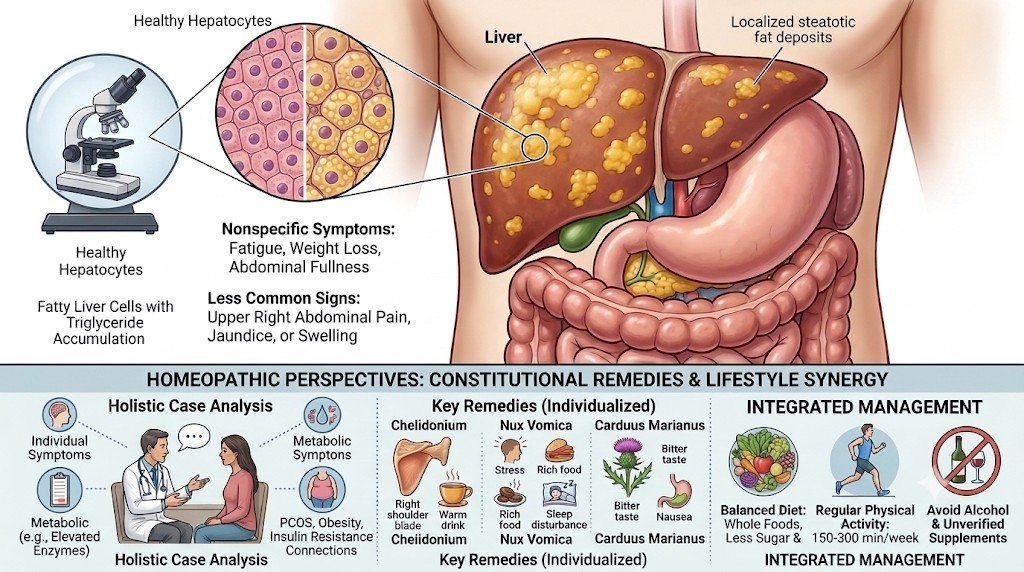
Commonly Prescribed Homeopathic Medicines for Fatty Liver
Chelidonium majus: Often linked with right-sided upper abdominal discomfort or dull heaviness extending toward the right shoulder blade, a bitter taste in the mouth, nausea, or sluggish digestion with a preference for warm drinks or foods.
Lycopodium clavatum: Commonly considered when digestive symptoms include bloating, gas, and a feeling of fullness after eating only small amounts—especially later in the afternoon or evening—often accompanied by acidity, constipation, or cravings for sweets/warm food.
Nux vomica: Frequently associated with people experiencing sluggish digestion, heartburn, acidity, or constipation tied to irregular meal timings, rich/spicy food, late nights, stress, or sedentary routines, as well as irritability or a feeling of being chilly.
Carduus marianus: Often referenced for liver-related congestion, fullness or soreness in the upper right abdomen, bitter taste, nausea, or digestive upset linked with alcohol intake or rich, heavy meals.
Dietary Management
- Adopt an Anti-Inflammatory, Whole-Food Pattern:
- Base meals around whole grains (oats, brown rice, millets like ragi and jowar), legumes (dal, chickpeas, beans), fresh vegetables, and fruits.
- Incorporate healthy fats rich in omega-3s and monounsaturated fatty acids, such as mustard oil, olive oil, flaxseeds, chia seeds, walnuts, and fatty fish.
- Strictly Limit Refined Sugar & Fructose:
- Cut out sugar-sweetened beverages, packaged juices, carbonated drinks, bakery items, sweets, and high-fructose corn syrup, as excess fructose directly drives liver fat accumulation.
- Reduce Refined Carbohydrates & Unhealthy Fats:
- Avoid white flour (maida), white bread, fried foods, deep-fried snacks, ultra-processed fast food, trans fats, and excessive saturated fats (like heavy ghee or commercial vanaspati).
- Maintain Portion Control & Caloric Balance:
- Aim for a steady, gradual weight loss of 5% to 10% of total body weight if overweight. Avoid crash diets or sudden starvation, as rapid weight loss can paradoxically trigger liver inflammation.
- Avoid Alcohol Entirely:
- Completely eliminate or strictly restrict alcohol consumption, as even moderate amounts can compound fat accumulation and stress liver cells.
2. Physical Activity & Daily Routine
- Regular Aerobic Exercise:
- Engage in at least 150 to 300 minutes of moderate-intensity aerobic exercise per week (such as brisk walking, cycling, swimming, or dancing).
- Incorporate Resistance Training:
- Perform strength or weight training 2–3 times weekly. Building lean muscle improves insulin sensitivity and helps burn visceral fat independently of weight loss.
- Break Up Sedentary Time:
- Limit continuous sitting. Stand up, stretch, or take short 5-minute walking breaks every hour throughout the day.
3. General Health & Metabolic Management
- Control Associated Conditions:
- Maintain optimal control of blood sugar (if diabetic or prediabetic), blood pressure, and lipid profiles (cholesterol and triglycerides) through regular monitoring and prescribed therapies.
- Avoid Hepatotoxic Substances & Unverified Supplements:
- Use over-the-counter medications (such as pain relievers like paracetamol/acetaminophen) strictly as recommended, as overuse burdens the liver. Avoid unverified self-medication or unregulated supplements without professional oversight.
- Prioritise Quality Sleep & Stress Reduction:
- Aim for 7 to 8 hours of restful sleep daily. Poor sleep duration and chronic stress alter metabolic hormones and worsen insulin resistance.
- Regular Monitoring:
- Schedule periodic follow-ups with your healthcare provider, including liver function tests (LFTs) and periodic imaging (like an ultrasound or FibroScan), to monitor progress and verify recovery.
Potential Complications of Fatty Liver
- Steatohepatitis (MASH / NASH): When excess fat triggers inflammation and liver cell injury, the condition advances to metabolic dysfunction-associated steatohepatitis (MASH, formerly NASH) or alcohol-related steatohepatitis. Ongoing inflammation damages liver tissue.
- Liver Fibrosis: Repeated cycles of injury and healing cause fibrous scar tissue to build up in the liver. At first, scarring may be mild, but it can gradually stiffen the liver and restrict blood flow.
- Cirrhosis: Extensive, permanent scarring across the liver disrupts its structure and function. Cirrhosis is often irreversible and can lead to liver failure.
- Portal Hypertension & Varices: Scarring increases pressure in the portal vein (the main vessel carrying blood to the liver). This can cause enlarged, fragile veins (varices) in the food pipe (oesophagus) or stomach that can bleed dangerously, as well as fluid buildup in the abdomen (ascites).
- Liver Failure & Hepatocellular Carcinoma (Liver Cancer): Advanced cirrhosis raises the risk of liver decompensation (when the liver can no longer keep up with essential functions) and primary liver cancer, even in some people before full-blown cirrhosis develops.
- Broader Metabolic & Cardiovascular Risks: Metabolic fatty liver shares close ties with insulin resistance, type 2 diabetes, high triglycerides/cholesterol, and heart disease—cardiovascular issues are actually a leading cause of health complications in people with fatty liver.
Red Flags: When to Seek Prompt or Urgent Medical Care
Many people with early fatty liver feel fine or have vague symptoms like mild fatigue or upper-right abdominal heaviness. Seek prompt medical evaluation—and urgent/emergency care if severe signs appear—if you notice:
- Jaundice: Yellowing of the whites of the eyes or skin, often paired with dark urine or pale/clay-coloured stools.
- Fluid Buildup or Swelling: Noticeable swelling in the abdomen (ascites) or persistent swelling (oedema) in the legs, ankles, or feet.
- Signs of Bleeding: Vomiting blood or material that looks like coffee grounds, or passing black, tarry stools.
- Neurological / Cognitive Changes: New confusion, disorientation, slurred speech, trouble concentrating, unusual drowsiness, or mood/sleep shifts (which can point to hepatic encephalopathy).
- Severe or Worsening Pain: Sharp, sudden, or severe abdominal pain—especially in the upper right side—or high fever/chills.
- Easy Bruising or Prolonged Bleeding: Bruising effortlessly or bleeding that takes unusually long to stop.
Disclaimer: Homeopathic medicines work best when prescribed after a thorough clinical evaluation. Avoid self-medication and consult a qualified homeopathic physician.
Can fatty liver be reversed naturally?
Mild fatty liver (such as Grade 1 without significant inflammation or scarring) is often reversible when underlying triggers are addressed consistently. Gradual weight loss (around 5% to 10% of body weight if overweight), regular physical activity, cutting back on refined sugars and alcohol, and managing metabolic conditions like diabetes, high cholesterol, or thyroid issues play the central role in reducing liver fat.
How does homeopathy approach fatty liver?
In homeopathy, prescriptions are individualized based on a person’s broader symptom picture—such as digestion, bloating, appetite, food preferences, stress levels, and constitutional traits—rather than solely on an ultrasound or blood report. Remedies like Chelidonium majus, Lycopodium clavatum, Nux vomica, and Carduus marianus are commonly chosen when their symptom profiles match the patient’s presentation.
Does homeopathy have strong clinical proof for removing liver fat?
While many people use homeopathy for digestive comfort and holistic symptom support, strong clinical evidence showing that homeopathic remedies directly clear liver fat or prevent fibrosis and cirrhosis is limited. Because of this, homeopathic care works best alongside—not as a replacement for—proven lifestyle changes, metabolic control, and regular medical monitoring.
How long does improvement typically take?
Timelines vary depending on the grade of fatty liver, how long it has been present, and how consistently diet, exercise, and metabolic factors are managed. Mild fat buildup or digestive discomfort may begin shifting over a few months of steady habits, while moderate-to-advanced changes or elevated liver enzymes require ongoing follow-ups rather than quick fixes.
Should I get an ultrasound or Liver Function Test (LFT) before starting treatment?
Yes. Baseline tests—such as a Liver Function Test (LFT) to check enzymes like SGOT and SGPT, and abdominal imaging like an ultrasound or FibroScan when advised—help establish the starting point, rule out other liver concerns, and track whether liver health is genuinely improving over time.
Is self-medication safe for fatty liver?
No. Even when remedies or herbal/combination products are marketed as “natural” or “liver-friendly,” self-medicating or taking unverified supplements can delay proper evaluation or place unnecessary strain on the liver. Always consult a qualified homeopathic physician and coordinate with your primary doctor if you have abnormal LFTs, metabolic conditions, or warning signs like jaundice, abdominal fluid swelling, or vomiting blood.

Written by Dr. Gunjan Rai, BHMS, MD (Homeopathy) – a trusted homeopathic doctor with 13+ years of experience and 10,000+ patients treated. She completed her BHMS from Nehru Homeopathic Medical College (Delhi University) and MD from West Bengal University of Health Sciences. Dr. Rai has served in reputed government hospitals including GTB and JPC, and was a research fellow at the Central Council for Research in Homeopathy. Her clinical expertise covers chronic diseases, allergies, hormonal imbalance, skin and hair concerns, pediatric health, and women’s wellness. She has also published multiple research papers in reputed journals, combining scientific rigor with compassionate care.