Vitiligo is a long-term skin condition where patches of skin lose their color due to the loss of melanin, the pigment responsible for skin color. While white patches can appear anywhere on the body, they commonly show up on sun-exposed areas such as the face, hands, wrists, and legs. While vitiligo isn’t life-threatening or painful, it can deeply affect a person’s self-esteem and emotional well-being.
If you are noticing white spots or seeking a gentle, holistic approach to manage skin pigmentation, finding the best homeopathic doctor near me is often the first step toward long-term recovery.
Root Causes of Vitiligo
Vitiligo occurs when melanocytes—the cells that produce skin pigment—stop functioning or die off. While the exact trigger varies for each individual, common factors include:
- Autoimmune Responses: The body’s immune system mistakenly attacks healthy melanocytes.
- Genetic Factors: A family history of vitiligo or autoimmune disorders can increase susceptibility.
- Emotional Stress: High stress levels and mental fatigue are known triggers for pigment loss and disease progression.
- Nutritional Deficiencies: Lack of essential nutrients like Vitamin B12, copper, and folic acid can impair skin cell renewal.

Types of Vitiligo
Here are the primary types of vitiligo classified by how and where they appear on the body, structured for inclusion in your article:
1. Non-Segmental Vitiligo (Generalized) This is the most widespread form, accounting for approximately 90% of cases. The depigmented patches typically appear symmetrically on both sides of the body (e.g., both knees or both hands) and often progress in start-and-stop cycles over time.
Subtypes include:
- Generalized: Patches are scattered widely across multiple regions of the body.
- Acrofacial: Pigment loss is restricted mainly to the face, hands, feet, and areas around body openings (eyes, nose, mouth).
- Universal: An extremely rare presentation where depigmentation covers more than 80% to 90% of the body surface.
- Mucosal: Affects the mucous membranes lining the mouth, inner nose, or genital areas.
2. Segmental Vitiligo Characterized by white patches that develop on only one side or one specific segment of the body (such as one arm, one side of the face, or one leg). It tends to appear at an earlier age, progresses rapidly for 1 to 2 years, and then usually stabilizes without further spreading.
3. Focal Vitiligo Occurs when a few isolated white spots develop in a single localized area without a clear pattern. This type often remains static in a small patch, though in some instances, it may evolve into generalized or segmental vitiligo over time.
4. Trichome Vitiligo A distinctive clinical pattern featuring a three-shaded appearance: a central zone of completely white skin, surrounded by an intermediate area of lighter/partially pigmented skin, which transitions into normal-toned skin.
5. Mucosal Vitiligo Specifically targets the moist mucous membranes of the lips, mouth cavity, or genital regions. While mucosal involvement can occur alongside generalized vitiligo, it can also manifest as an isolated condition.
| Type | Pattern & Distribution | Progression Trajectory |
| Non-Segmental | Bilateral & symmetrical across both sides | Progressive with unpredictable flare-ups |
| Segmental | Unilateral (restricted to one side/segment) | Rapid initial growth, followed by early stabilization |
| Focal | Isolated, localized spots | Stays small or remains limited to one spot |
How to Differentiate Vitiligo from Other White Spots on Skin
Not every pale or white patch on the skin is vitiligo. To tell them apart, look closely at the color, texture, and symptoms:
- Color Intensity: Vitiligo produces stark, “chalk-white” or milky patches because skin pigment is completely absent. Other conditions, like tinea versicolor or pityriasis alba, usually leave lightened (hypopigmented) rather than completely white skin.
- Border Definition: Vitiligo patches typically have distinct, sharp borders, sometimes with a darker rim around the edges. Most other skin spots have faded or ill-defined edges that blend gradually into surrounding skin.
- Texture & Scaling: Vitiligo only changes skin color; the skin texture remains entirely smooth and normal. Spots caused by fungal infections or eczema often feel dry, rough, or scaly.
- Sensory Symptoms: Vitiligo patches do not itch, hurt, or flake. If a pale spot is itchy or raised, it is more likely related to contact dermatitis, fungal activity, or psoriasis.
Also Read: Homeopathy for Autoimmune Disease: Safe, Evidence-Based Care
How Homeopathy Helps in Treating Vitiligo
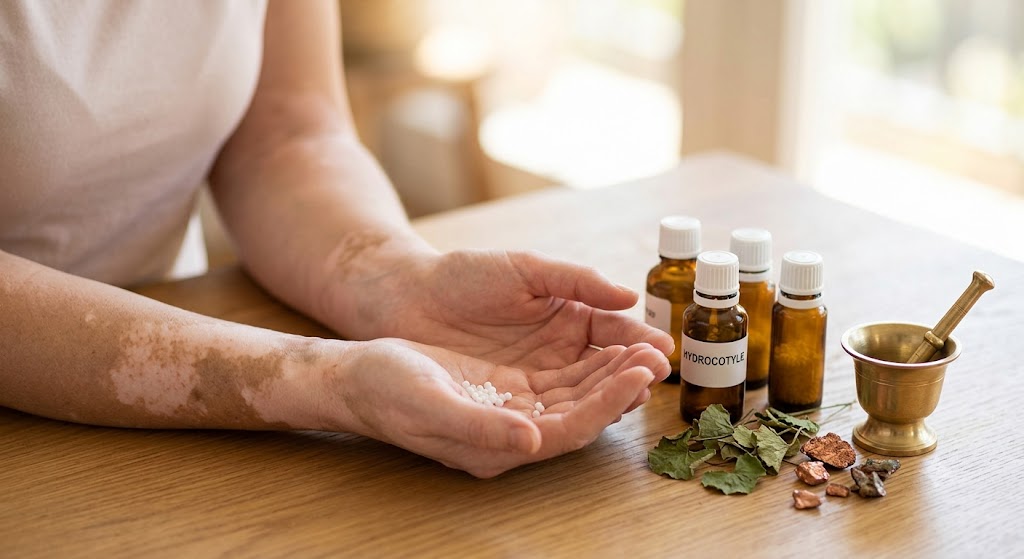
Conventional treatments often rely on aggressive topical creams or steroids that suppress symptoms, which may lead to unwanted side effects. Homeopathy, on the other hand, works from within to stimulate natural re-pigmentation and balance the immune system without harsh chemicals.
Key Benefits of Homeopathic Treatment:
- Root-Cause Healing: Homeopathy treats the individual as a whole, addressing stress, immunity, and digestive health alongside skin symptoms.
- Controls Disease Progression: Target remedies help arrest the spread of new white patches.
- Promotes Natural Re-pigmentation: Encourages remaining melanocytes to produce pigment naturally, often starting at the edges of the patches.
- Safe and Non-Toxic: Remedies are natural, gentle, and free from harmful side effects, making them suitable for all age groups.
Common Homeopathic Remedies Used for Vitiligo
- Arsenicum Sulfuratum Flavum: Often prescribed for widespread non-segmental vitiligo accompanied by dry skin or intense anxiety.
- Hydrocotyle Asiatica: Frequently considered when white patches appear alongside skin thickening or localized loss of sensation.
- Silicea & Calcarea Carbonica: Preferred choices for individuals with constitutional patterns involving slow metabolism, extreme sensitivity to cold, or strong familial autoimmune histories.
- Psoralea Corylifolia (Bavchi): Commonly utilized in homeopathic dilutions to enhance light sensitivity and encourage melanocyte activation.
Note: Because homeopathy relies on constitutional evaluation, consulting an experienced homeopathic doctor is essential to determine the specific remedy, potency, and dosage tailored to your unique profile.
What to Expect During Your Homeopathic Consultation
Unlike standard medical consultations that focus solely on visible patches, a detailed homeopathic assessment covers:
- Complete medical and family history
- Analysis of emotional triggers and stress levels
- Personal dietary habits and lifestyle
- Individual physical traits and general health
This deep constitutional evaluation ensures that your remedy is tailored specifically to your unique profile rather than a generic prescription.
Expert Homeopathic Care in Your Neighborhood
Finding experienced clinical guidance is crucial for managing autoimmune skin conditions effectively. If you are looking for trusted, personalized care:
- Residents of Indirapuram can visit Dr. Gunjan’s clinic for specialized care by consulting the best homeopathic doctor in Indirapuram, Ghaziabad.
- If you are located in nearby NCR regions, expert guidance is easily accessible through the best homeopathic doctor near Noida.
Lifestyle and Dietary Tips for Vitiligo Management
Alongside constitutional homeopathic remedies, simple daily habits can support skin recovery:
- Manage Stress: Practice yoga, meditation, or daily light exercise to maintain mental calm.
- Nutritional Balance: Maintain a balanced diet rich in antioxidants, zinc, copper, and essential vitamins (such as B12 and folic acid) to support cellular health.
- Protect Your Skin: Avoid harsh soaps, chemical detergents, and excessive trauma or injuries to the skin.
- Stay Hydrated: Drink plenty of water throughout the day to support skin cellular health.
- Sun Protection: Depigmented skin lacks natural melanin protection and burns easily. Apply a broad-spectrum sunscreen (SPF 30 or higher) daily to exposed skin.
Take the First Step Toward Healing Today
Healing vitiligo requires patience, consistency, and a targeted treatment plan. At Dr. Gunjan’s Homeo Cure, we are dedicated to helping you restore healthy skin and renewed confidence through safe, individualised homeopathic care.
Book your consultation today to start your natural path toward recovery!
Frequently Asked Questions (FAQs) About Homeopathic Treatment for Vitiligo
Can homeopathy completely cure vitiligo?
Homeopathy aims to halt the spread of depigmentation, balance the immune system, and stimulate natural melanocyte regeneration. While results vary based on how early treatment begins, the extent of coverage, and individual response, many patients experience significant re-pigmentation and long-term stabilization.
How long does it take to see results with homeopathic treatment for vitiligo?
Because vitiligo is a chronic autoimmune condition, treatment requires time and patience. Initial signs of improvement—such as the stopping of new white spots or appearance of tiny brown dots (pigment islets) inside white patches—typically become visible within 3 to 6 months. Complete therapy usually spans 12 to 24 months.
Is homeopathic treatment for vitiligo safe for children?
Yes. Homeopathic remedies are natural, non-toxic, and free from harsh side effects or steroid dependencies, making them exceptionally safe for children, adults, and elderly patients.
Can vitiligo spread during homeopathic treatment?
In the early phases of treatment, active lesions may take a short period to stabilize as the immune system balances itself. Once the constitutional remedy takes effect, the spread typically halts before re-pigmentation starts.
How do I find the right homeopathic practitioner for vitiligo?
Selecting an experienced practitioner who specializes in constitutional skin care is crucial. If you are searching online for the best homeopathic doctor near me, look for doctors who perform comprehensive evaluations covering your medical history, stress factors, and personal profile.
Are there any dietary restrictions while undergoing homeopathic care?
While homeopathy doesn’t require extreme starvation diets, maintaining an antioxidant-rich diet with essential minerals (copper, zinc, and Vitamin B12) supports skin recovery. Avoid excessive physical skin trauma, chemical soaps, and unguided home remedies during your course of care
Where can I consult a homeopathic specialist near Delhi NCR?
You can consult Dr. Gunjan Rai, a leading homeopathic doctor in Shipra Suncity, Indirapuram, Ghaziabad, at Dr. Gunjan’s Homeo Cure. For patients living nearby in Ghaziabad or searching for the best homeopathic doctor near noida, the clinic offers convenient in-person visits. If you are located further away or prefer remote care, both in-clinic and online consultations are available to help you begin your personalized healing journey from anywhere.

Written by Dr. Gunjan Rai, BHMS, MD (Homeopathy) – a trusted homeopathic doctor with 13+ years of experience and 10,000+ patients treated. She completed her BHMS from Nehru Homeopathic Medical College (Delhi University) and MD from West Bengal University of Health Sciences. Dr. Rai has served in reputed government hospitals including GTB and JPC, and was a research fellow at the Central Council for Research in Homeopathy. Her clinical expertise covers chronic diseases, allergies, hormonal imbalance, skin and hair concerns, pediatric health, and women’s wellness. She has also published multiple research papers in reputed journals, combining scientific rigor with compassionate care.