Urinary Tract Infections (UTIs) are incredibly common, affecting millions of people worldwide every year. Characterized by a burning sensation during urination, a constant urge to go, and pelvic discomfort, a UTI can quickly disrupt daily life.
While conventional medicine relies almost exclusively on antibiotics to clear the infection, an increasing number of individuals are exploring complementary approaches. Homeopathy is one such alternative that focuses on stimulating the body’s natural defense mechanisms. If you are currently dealing with chronic urinary issues, finding the best homeopathic doctor near me is the first step toward getting a personalized, holistic treatment plan that addresses the root cause of your symptoms. For personalized constitutional treatment of recurrent UTIs, consulting an experienced practitioner—such as Dr. Gunjan Rai at Dr. Gunjan Homeocure in Indirapuram & Ghaziabad—helps ensure an accurate remedy match based on your full clinical historyHomeopathic Doctor Near Me in Indirapuram.
Homeopathy operates on the principle of “Like cures like” (Similia Similibus Curentur). Rather than viewing a UTI purely as an isolated bacterial invasion, homeopathy looks at it as a sign of an underlying imbalance in the body’s vital force. The goal is to stimulate the immune system to help the body naturally clear the pathogen and reduce susceptibility to future infections.
Key Takeaways: Homeopathy & UTIs
- Role: Used primarily as a complementary/supportive approach for symptom discomfort and reducing susceptibility in chronic, recurrent UTIs.
- Common Remedies: Cantharis (burning pain/urgency), Staphysagria (post-intercourse/catheter-related), Sabal Serrulata (prostate/BPH-related).
- Safety First: Acute or severe UTIs with fever or back pain require immediate conventional evaluation to prevent kidney complications.

What Causes UTIs and Who Is Most at Risk?
A Urinary Tract Infection (UTI) is an infection in any part of your urinary system, which includes your kidneys, ureters, bladder, and urethra. Most infections involve the lower urinary tract—specifically the bladder (cystitis) and the urethra (urethritis). While highly treatable, UTIs can cause significant discomfort and lead to serious kidney complications if left unchecked.
1. What Causes a UTI?
UTIs occur when microscopic pathogens—typically bacteria—enter the urinary tract through the urethra and begin to multiply in the bladder.
- Bacterial Culprits: The bacterium Escherichia coli (E. coli), normally found in the gastrointestinal (GI) tract, is responsible for approximately 80% to 90% of community-acquired UTIs. Other bacteria, such as Staphylococcus saprophyticus, Klebsiella pneumoniae, and Proteus mirabilis, can also cause infections.
- Other Pathogens: In rare cases, especially in individuals with weakened immune systems or those requiring catheters, fungi (like Candida) or viruses can cause UTIs.
2. General Risk Factors
Several factors can increase the likelihood of developing a UTI:
- Anatomical Differences: A shorter urethra makes it easier for bacteria to reach the bladder.
- Sexual Activity: Intercourse can introduce bacteria into the urinary tract.
- Certain Types of Birth Control: Using diaphragms or spermicidal agents can alter pelvic flora and increase risk.
- Urinary Tract Abnormalities: Structural blockages (like kidney stones or an enlarged prostate) prevent the bladder from emptying completely.
- Suppressed Immune System: Conditions like diabetes compromise the body’s natural defenses against bacteria.
- Catheter Use: People who use a tube to urinate have a significantly elevated risk of bacterial introduction.
3. Most Affected Age Group
While UTIs can affect anyone at any age, young to middle-aged women (ages 18 to 45) are the most frequently affected group. Within this demographic, sexual activity is the primary driver.
A second spike in prevalence occurs in older adults (65 and older) of both sexes, largely due to age-related changes such as bladder prolapse, prostate enlargement, incontinence, and increased catheter use in medical settings.
4. UTIs Across Different Demographics
A. UTIs in Females
Women are disproportionately affected by UTIs, with research estimating that over 50% of all women will experience at least one UTI in their lifetime.
- Why Women are More Susceptible: The primary reason is anatomical. The female urethra is much shorter than the male urethra and is located close to both the vagina and the anus, making it easier for bacteria to migrate into the bladder.
- Hormonal Changes: Menopause causes a decline in estrogen, which leads to changes in the vaginal tissue and vaginal microbiome. This reduction in beneficial lactobacilli makes the urinary tract more vulnerable to colonization by harmful bacteria.
B. UTIs in Males
UTIs in men are relatively uncommon, especially under the age of 50.
- Why Men Have Lower Risk: The male urethra is longer, making it difficult for bacteria to travel up to the bladder. Additionally, prostatic fluid contains natural antibacterial properties that help fight off pathogens.
- UTIs in Older Men: The risk for men increases significantly after age 50, primarily due to Benign Prostatic Hyperplasia (BPH) or an enlarged prostate. An enlarged prostate squeezes the urethra, preventing the bladder from emptying fully. The stagnant urine left behind becomes a breeding ground for bacteria.
C. UTIs in Children
UTIs are common childhood occurrences, affecting up to 8% of girls and 2% of boys by the age of seven.
- Causes in Children: In infants and toddlers, UTIs are often linked to bowel movements held in diapers. In older children, poor wiping habits (wiping back-to-front), infrequent urination, or stool withholding (constipation) can lead to infections.
- Vesicoureteral Reflux (VUR): Some children are born with VUR, a condition where urine flows backward from the bladder up into the ureters and kidneys. This requires medical evaluation to prevent long-term kidney scarring.
- Symptoms to Watch For: Unlike adults, young children may not be able to describe a burning sensation. Signs include unexplained fever, irritability, poor feeding, bedwetting in a previously toilet-trained child, or foul-smelling urine.
5. Recurrent UTIs and Their Causes
A UTI is classified as recurrent if an individual experiences two or more infections within six months, or three or more within one year. Recurrent UTIs are incredibly frustrating and are particularly common in women.
Key Causes of Recurrence:
- Bacterial Reservoirs (Persisters): Sometimes, bacteria invade the lining cells of the bladder, forming a protective barrier (biofilm) that shields them from antibiotics. Once the treatment ends, these dormant bacteria can emerge and trigger a new infection.
- Behavioral Patterns: Frequent sexual intercourse, using spermicides, or delaying urination can continuously reintroduce bacteria.
- Genetic Susceptibility: Some individuals naturally have certain types of receptors on their bladder cells that make it easier for bacteria like E. coli to attach and stay anchored.
- Postmenopausal Changes: Ongoing estrogen deficiency continues to suppress protective vaginal flora, leading to successive infections.
- Anatomical or Functional Issues: Conditions that cause incomplete bladder emptying—such as a cystocele (bladder prolapse) in women or pelvic floor dysfunction—leave residual urine that regularly becomes infected.
A UTI occurs when bacteria—most commonly Escherichia coli (E. coli)—enter the urinary system through the urethra and begin to multiply in the bladder. If left unchecked, the infection can travel up to the kidneys, leading to more serious complications.
Standard treatment typically involves a short course of antibiotics. While highly effective at killing bacteria, frequent antibiotic use presents certain challenges:
- Antibiotic Resistance: Overuse can lead to bacteria mutating, making future infections harder to treat.
- Gut Microbiome Disruption: Antibiotics wipe out both bad and good bacteria, often leading to digestive issues or secondary yeast infections.
- Recurrent Infections: Some individuals find themselves caught in a cycle of chronic, recurring UTIs as soon as the antibiotic course ends.
The Homeopathic Approach to UTIs
Homeopathy operates on a foundational philosophy: “Like cures like” (Similia Similibus Curentur). This principle suggests that a substance that can cause symptoms in a healthy person can, when highly diluted, trigger the body’s self-healing response to cure similar symptoms in a sick person.
Unlike conventional medicine, which prescribes the same antibiotic to almost anyone with a UTI, homeopathy is highly individualized. A homeopath evaluates not just the physical infection, but the specific nature of the pain, the patient’s emotional state, temperature preferences, and overall constitution.
Below is a detailed guide to homeopathic remedies commonly used for UTIs across specific clinical scenarios, followed by key prevention strategies.Book an Appointment
1. Demographic & Clinical Applications of Homeopathy in UTIs
A. UTIs in Females
Women are highly susceptible to UTIs due to their anatomy (a shorter urethra located close to the vagina and anus).
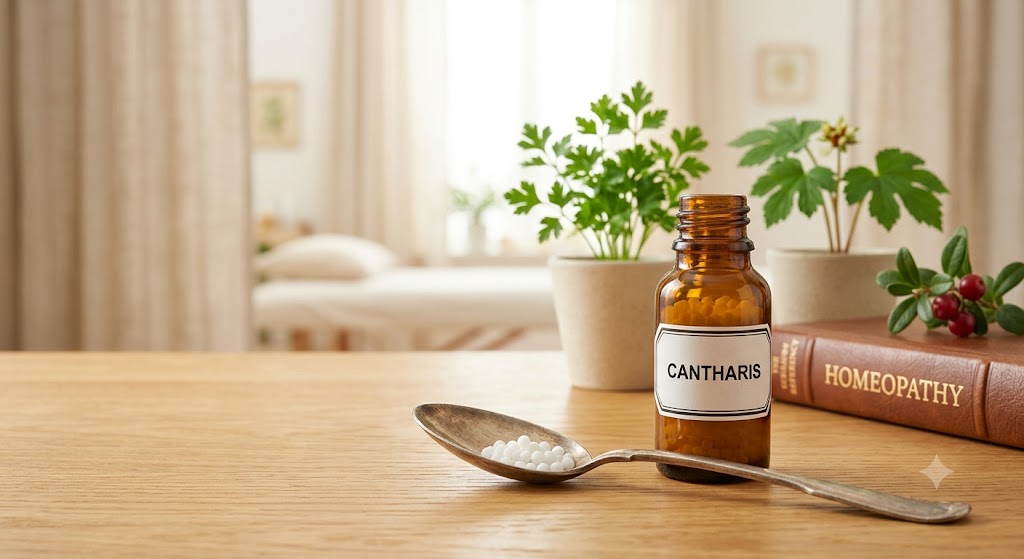
- Cantharis: The primary remedy for intense, acute UTIs. It is indicated when there is an intolerable, constant urge to urinate, accompanied by severe, cutting, or burning pain before, during, and after urination, where urine passes only in painful drops.
- Apis Mellifica: Ideal when the symptoms mirror the stinging sensation of a bee sting. It is indicated for stinging, burning pains during urination, often aggravated by warmth and relieved by cold applications.
B. UTIs in Males
UTIs in men under 50 are relatively rare, but when they occur, they require careful evaluation.
- Clematis Erecta: Often considered when there is a slow or interrupted urine flow with burning pain at the start of urination.
- Lycopodium: Indicated for severe backache or renal discomfort prior to urination, with red sand-like sediment in the urine.
C. UTIs in Children
UTIs in young children are common and can present as unexplained fever, bedwetting, or irritability.
- Belladonna: Used in acute, sudden-onset UTIs accompanied by a high fever, hot skin, and general restlessness.
- Pulsatilla: Frequently indicated in gentle, clingy children who experience involuntary urination (especially at night or when coughing) and have burning pain during and after urinating.
D. Recurrent UTIs
Recurrent UTIs (two or more infections in six months) often point to a weakened immune response or deep-seated susceptibility.
- Sepia: Often indicated for chronic, recurrent UTIs, especially in women who experience a constant bearing-down sensation in the pelvic region, frequent urges, and a feeling of coldness.
- Staphysagria: Recommended when recurrent infections are tied to emotional distress, suppressed anger, or pelvic muscle weakness.
E. UTI After Catheter Use
The use of urinary catheters can introduce bacteria and cause mechanical irritation to the urethra.
- Staphysagria: This is the premier remedy for urinary tract irritation or infections that arise following mechanical instrumentation, surgical procedures, or catheterization.
- Arnica Montana: Used to relieve the soreness, bruising, and physical trauma associated with catheter insertion and removal.
F. UTI After Sexual Intercourse
Often referred to historically as “honeymoon cystitis,” these infections occur when sexual activity pushes bacteria into the urethra.
- Staphysagria: Highly effective for UTIs that consistently develop after sexual intercourse, especially when accompanied by a persistent burning sensation in the urethra even when not urinating.
- Sarsaparilla: Indicated when severe, burning pain is felt right at the end of urination.
G. UTI in Patients with Diabetes
Diabetes compromises the body’s immune defenses and increases sugar levels in the urine, making it an ideal breeding ground for bacteria.
- Phosphoric Acid (Acidum Phosphoricum): Indicated for individuals with diabetes who experience frequent, copious, watery urination, accompanied by physical exhaustion and weakness.
- Syzygium Jambolanum: Often used alongside constitutional remedies to support metabolic balance while addressing frequent, urgent urination.
H. UTI Linked to Benign Prostatic Hyperplasia (BPH)
In older men, an enlarged prostate (BPH) can squeeze the urethra, leading to incomplete bladder emptying and stagnant urine that easily becomes infected.
- Sabal Serrulata: This is a major remedy for prostate irritability. It is indicated when there is difficult, painful urination, a constant urge to urinate at night (nocturia), and a sensation of a cold stone in the bladder.
- Chimaphila Umbellata: Indicated when the patient has to strain significantly to urinate, often finding it easier to pass urine while standing up and leaning forward.
| Symptom / Cause | Common Homeopathic Remedy |
| Severe burning & constant urge | Cantharis |
| Post-intercourse UTI | Staphysagria |
| Stinging pain relieved by cold | Apis Mellifica |
| Prostate/BPH-related UTI | Sabal Serrulata |
| Recurrent / Chronic UTIs | Sepia |
2. Practical Tips for UTI Prevention
Regardless of the therapeutic pathway you choose, supporting your urinary tract through daily habits is essential for long-term health:
- Stay Well-Hydrated: Drink plenty of water throughout the day. This dilutes your urine and ensures you urinate frequently, flushing bacteria out of the tract before an infection can take hold.
- Practice Proper Hygiene: Always wipe from front to back after using the bathroom to prevent bacteria from the anal region from spreading to the urethra.
- Urinate After Intercourse: Empty your bladder shortly after sexual activity to help flush out any bacteria that may have been introduced into the urethra.
- Avoid Irritating Products: Limit the use of feminine deodorants, douches, and bubble baths, which can irritate the urethra and alter the natural protective flora.
- Wear Loose-Fitting Cotton Underwear: Breathable cotton fabric helps keep the area dry, preventing the moist environment that bacteria thrive in.
- Consider D-Mannose or Cranberry: D-mannose (a natural sugar found in cranberries) can help prevent E. coli bacteria from adhering to the walls of the bladder.
A Note on Safety and Clinical Caution
While exploring homeopathic remedies can be highly supportive for managing discomfort and chronic susceptibility, acute UTIs can escalate rapidly. An untreated or improperly managed UTI can travel upward to the kidneys, which is a serious medical emergency.
Common Homeopathic Remedies for UTI Symptoms
In homeopathy, the choice of remedy depends entirely on the exact presentation of symptoms. Here are some of the most frequently utilized remedies for urinary tract discomfort:
What Does the Science Say?
From a clinical standpoint, the medical community remains divided on homeopathy. Because homeopathic remedies are highly diluted—often to the point where no molecules of the original substance remain—conventional scientific models attribute their effects to the placebo response.
However, advocates and some observational studies suggest that individualized homeopathic care can be a useful tool, particularly in managing the discomfort of mild, uncomplicated UTIs or as a supportive measure alongside lifestyle changes to prevent chronic recurrence.
Practical Lifestyle Tips for UTI Prevention
Regardless of the therapeutic pathway you choose, supporting your urinary tract through daily habits is essential for long-term health:
- Stay Hydrated: Drinking plenty of water helps flush bacteria out of the urinary tract naturally.
- Practice Good Hygiene: Always wipe from front to back after using the bathroom to prevent bacteria from the anal region from spreading to the urethra.
- Urinate Promptly: Do not hold urine for long periods, and make it a habit to urinate shortly after sexual intercourse to clear any bacteria that may have entered the urethra.
- Consider Cranberry or D-Mannose: Some studies suggest that D-mannose (a natural sugar found in cranberries) can prevent E. coli from adhering to the walls of the bladder.
Finding the Right Care: Consult a Homeopathic Specialist
Because homeopathy relies on highly individualized treatment, self-prescribing is rarely effective for chronic or deep-seated issues like recurrent UTIs. To get a remedy that perfectly matches your physical symptoms and overall constitution, it is essential to consult an experienced practitioner.
- For Residents in Ghaziabad & Indirapuram: If you are looking for local clinical expertise, consulting the best homeopathic doctor in Ghaziabad ensures you receive a targeted treatment plan. For those living specifically in Shipra Suncity and nearby areas, visiting Dr. Gunjan Rai, a trusted homeopathic doctor and widely regarded as the best homeopathic doctor in Indirapuram, provides easy access to highly personalized care close to home
- For Residents in Noida: If you reside nearby in Gautam Buddha Nagar, scheduling an appointment with the best homeopathic doctor in noida can help you find natural ways to manage recurrent urinary issues and strengthen your immune system.
- Across the National Capital Region: For comprehensive, holistic healthcare solutions, consulting the best homeopathic doctor in Delhi NCR ensures you are guided by a seasoned specialist who understands how to treat both acute infections and chronic susceptibility.
- Online consultations are also available for Indian and International patients.Online Homeopathy Consultation
A Note on Safety and When to See a Doctor
While managing mild symptoms naturally is an option many explore, UTIs can escalate rapidly. An untreated or improperly managed UTI can travel to the kidneys, which is a medical emergency.
You should seek immediate conventional medical care if you experience any of the following “red flag” symptoms:
- Fever, chills, or night sweats
- Severe pain in your lower back, side, or flank
- Nausea and vomiting
- Visible blood in the urine or highly cloudy, foul-smelling urine
If you decide to explore homeopathy for chronic or acute UTIs, it is best to consult with a qualified, professional homeopath who can accurately assess your symptom profile, and always keep your primary care physician informed of any alternative treatments you are pursuing.
Can homeopathy cure a severe or acute UTI?
Homeopathy can help relieve mild urinary discomfort and support the body’s healing response and prevent the recurrence of infection. However, severe UTIs require immediate medical evaluation. If left untreated, a bacterial infection can quickly spread to the kidneys (pyelonephritis), which is a serious medical emergency.
How long does it take for homeopathic remedies to work for UTI symptoms?
In acute, mild discomfort, some individuals report symptom relief within 24 to 48 hours of taking an appropriately matched remedy (such as Cantharis or Apis Mellifica). For chronic or recurrent UTIs, constitutional homeopathic treatment takes longer—often several weeks to months—as it aims to improve overall immunity and reduce long-term susceptibility.
What is the best homeopathic medicine for recurrent UTIs in women?
There is no single “best” remedy, as homeopathy treats the individual rather than just the disease. However, remedies frequently prescribed for recurrent UTIs include:
Sepia: For chronic UTIs with a heavy, bearing-down pelvic sensation.
Staphysagria: For recurrent UTIs triggered by sexual activity (“honeymoon cystitis”) or emotional stress.
Pulsatilla: For shifting symptoms and sensitive constitutions. Consulting a qualified practitioner like Dr. Gunjan Rai ensures an accurate remedy based on your complete symptom profile.
Can I take homeopathic remedies alongside antibiotics for a UTI?
In most cases, yes. Homeopathic remedies are highly diluted and generally do not interact biochemically with conventional antibiotics. However, it is essential to inform both your primary medical doctor and your homeopathic practitioner about all treatments you are currently taking to ensure safe and coordinated care.
When should I stop self-treating a UTI and see a doctor immediately?
You should seek immediate medical care from a doctor or urgent care facility if you experience any of these red-flag symptoms:
High fever, chills, or night sweats
Moderate to severe back, side, or flank pain (near the kidneys)
Nausea, vomiting, or inability to keep fluids down
Visible blood in your urine or extremely cloudy, foul-smelling urine

Written by Dr. Gunjan Rai, BHMS, MD (Homeopathy) – a trusted homeopathic doctor with 13+ years of experience and 10,000+ patients treated. She completed her BHMS from Nehru Homeopathic Medical College (Delhi University) and MD from West Bengal University of Health Sciences. Dr. Rai has served in reputed government hospitals including GTB and JPC, and was a research fellow at the Central Council for Research in Homeopathy. Her clinical expertise covers chronic diseases, allergies, hormonal imbalance, skin and hair concerns, pediatric health, and women’s wellness. She has also published multiple research papers in reputed journals, combining scientific rigor with compassionate care.