Managing persistent throat infections, mouth breathing, and sleepless nights in children can be overwhelming for any parent. When swollen tonsils and enlarged adenoids repeatedly disrupt your child’s health, surgical removal often feels like the only option presented. However, holistic homeopathic care offers a safe, gentle, and effective non-surgical path—addressing the root cause of inflammation while leaving these essential immune-defending tissues completely intact.
Understanding Tonsillitis and Adenoiditis
Tonsils and adenoids form the body’s first line of defense against airborne and ingested pathogens. Located in the back of the throat and behind the nasal cavity respectively, these lymphatic tissues catch bacteria and viruses before they infect the rest of the body.
Understanding what triggers tonsillar and adenoid tissue swelling is essential for early prevention and targeted homeopathic care.
Primary Causes
- Recurrent Upper Respiratory Infections: Persistent exposure to viral invaders (such as Adenovirus, Epstein-Barr virus, and Rhinovirus) or bacterial pathogens (like Streptococcus pyogenes) causes constant immune activation and swelling.
- Chronic Airborne Allergies: Exposure to environmental allergens like dust mites, pollen, pet dander, and mold keeps the lymphatic tissue in a perpetual state of inflammation.
- Gastroesophageal & Laryngopharyngeal Reflux (GERD/LPR): Stomach acid washing back up into the throat irritates the mucosal lining, causing chronic swelling in the surrounding tissues.
Key Risk Factors
- Pediatric Age Group: Tonsils and adenoids naturally peak in size and immunological activity between ages 2 and 8, making children significantly more susceptible.
- Passive Smoke & Air Pollution: Exposure to secondhand cigarette smoke and high levels of urban air pollution continuously triggers throat inflammation.
- Overcrowded Environments: Children attending daycares, preschools, or crowded school settings face higher exposure to transmissible respiratory pathogens.
- Genetic Predisposition: A family history of enlarged lymph tissue, chronic sinusitis, or severe allergies increases a child’s likelihood of developing the condition.
Common Symptoms:
- Persistent sore throat and pain during swallowing
- Swollen, tender lymph nodes in the neck
- Loud snoring, sleep apnea, or mouth breathing
- Nasal speech and chronic runny nose
- Recurrent low-grade fever and fatigue
When these tissues get chronically inflamed, repeatedly removing them standardly treats the symptom rather than the underlying vulnerability.
Types and Grading
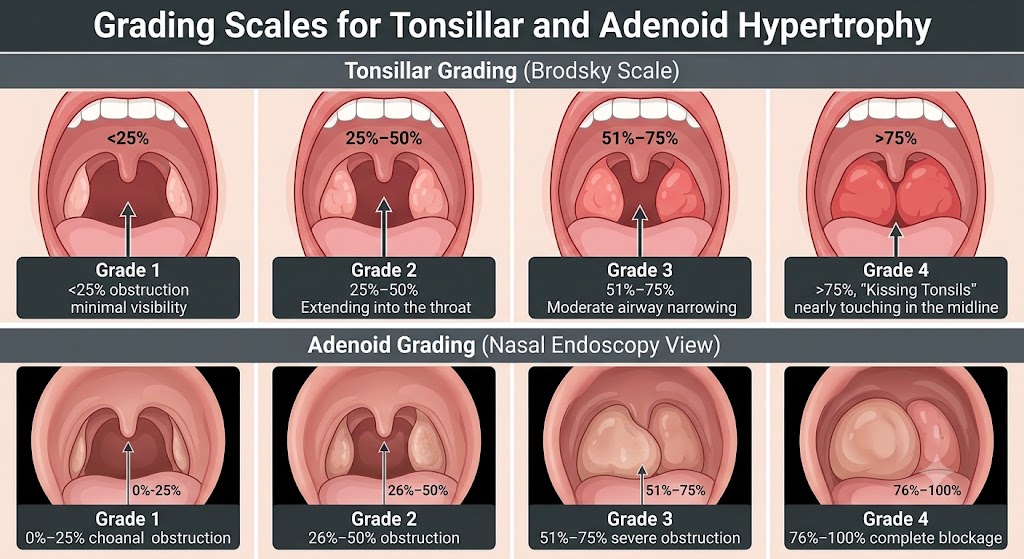
Enlarged tonsils and adenoids are evaluated by using clinical classifications and standardized grading scales based on airway obstruction.
Types of Enlargement
- Acute Hypertrophy: Temporary enlargement caused by active bacterial or viral infections (e.g., strep throat or mononucleosis).
- Chronic Hypertrophy: Persistent, long-term enlargement due to repeated infections, allergies, or chronic inflammation.
- Asymmetrical Enlargement: Size discrepancy where one side is larger than the other, requiring specialized clinical evaluation.
Also read: Homeopathy for Weak Immunity: A Natural Approach to Recurrent Infections & Low Resistance
Brodsky Grading Scale for Tonsillar Enlargement
Size of tonsils are clinically graded using the Brodsky Scale based on the percentage of space they occupy between the palatopharyngeal arches:
| Grade | Airway Obstruction | Visual Appearance |
| Grade 0 | 0% | Tonsils fit entirely inside the tonsillar fossa (or removed). |
| Grade 1 | < 25% | Barely visible beyond the tonsillar pillars. |
| Grade 2 | 25% – 50% | Extends slightly into the oropharyngeal space. |
| Grade 3 | 51% – 75% | Moderately enlarged, narrowing the throat. |
| Grade 4 | 75% | Severely enlarged; tonsils touch in the midline (“kissing tonsils”). |
Endoscopic Grading Scale for Adenoid Enlargement
Adenoids are evaluated using nasal endoscopy or X-rays and graded by the degree of choanal (posterior nasal cavity) obstruction due to their location behind the nose:
Grade 1 (Mild): Tissue obstructs less than 25% of the posterior nasal passage.
Grade 2 (Moderate): Tissue covers 25% to 50% of the airway.
Grade 3 (Severe): Tissue covers 50% to 75% of the airway, often causing mouth breathing and sleep disturbance.
Grade 4 (Very Severe): Over 75% to 100% complete obstruction of the nasal cavity

Why Choose Homeopathy Over Surgery?
Homeopathy aims to address the constitutional weakness that causes frequent infections. Rather than removing the defense mechanism, constitutional remedies strengthen the child’s immune system, allowing the enlarged tissue to shrink naturally over time.
- Preserves Immune Integrity: Keeps the natural lymphatic filter intact.
- Non-Invasive: Avoids surgical risks, general anesthesia, and painful post-op recovery.
- Reduces Recurrence: Targets immune susceptibility so infections happen less frequently and with milder intensity.
- Safe for Children: Sweet-tasting, non-toxic, and free from conventional drug side effects.
Common Homeopathic Remedies
Note: Homeopathic remedies must be prescribed by a qualified specialist based on individual symptoms.
- Baryta Carbonica: Effective for children who suffer from swollen tonsils at the slightest exposure to cold weather and experience developmental delays or frequent colds.
- Agraphis Nutans: A major remedy for enlarged adenoids causing nasal obstruction, deafishness, or ear discharge.
- Calcarea Phosphorica: Ideal for growing children prone to enlarged tonsils, chronic throat irritation, and weak digestion.
- Belladonna: Preferred during acute flare-ups marked by bright red, throbbing throat pain, high fever, and sudden onset.
- Silicea: Useful for recurrent tonsillitis with pus formation and high sensitivity to cold drafts.
Homeopathic treatment is generally most effective for Grade 1, Grade 2, and Grade 3 enlarged tonsils and adenoids.
- Grade 1 & Grade 2 (Mild to Moderate): These grades respond very quickly to constitutional homeopathic remedies. Treatment helps reduce mucosal inflammation, prevents recurrent infections, and shrinks the tissue back to normal parameters.
- Grade 3 (Severe): Homeopathy can successfully manage Grade 3 enlargement in many patients, reducing airway obstruction, halting mouth breathing, and preventing the need for surgery. However, progress requires consistent follow-up and close monitoring of symptoms like sleep apnea.
- Grade 4 (Very Severe / “Kissing Tonsils” / Near-Total Nasal Blockage): At this stage, tissue hypertrophy causes complete or near-complete upper airway obstruction, leading to severe obstructive sleep apnea (OSA), oxygen desaturation, or developmental issues. While homeopathy can be tried as a conservative measure, Grade 4 often requires surgical intervention if there is immediate physical distress or severe sleep apnea.
If you are seeing signs of continuous gasping, breathing pauses during sleep, or difficulty swallowing solids, an in-person clinical assessment by an ENT specialist alongside your homeopathic doctor is strongly recommended to ensure child safety.
Consultation & Expert Care
If you are looking for long-term relief from recurrent ear, nose, and throat issues without invasive procedures, consulting an experienced practitioner is the key.
For personalized care, book an appointment with Dr. Gunjan Rai, a trusted Homeopathic Doctor in Ghaziabad specializing in pediatric and chronic disorders. Her clinic is located at Shipra Suncity, Indirapuram, Ghaziabad.
Frequently Asked Questions (FAQs)
Can homeopathic remedies permanently shrink enlarged adenoids?
Yes, constitutional homeopathic treatment reduces inflammation and allows hypertrophied tissues to shrink back to their normal size gradually over a few months.
Is homeopathy safe for toddlers suffering from tonsillitis?
Absolutely. Homeopathic medicines are diluted, non-toxic, and gentle enough for infants and young children.
How long does homeopathic treatment take to show results?
Acute symptoms like sore throat, pain, and fever usually begin to improve within a few days of starting treatment. However, reducing chronic enlargement and preventing recurrent infections typically takes 3 to 6 months of consistent constitutional care.
When should a child with enlarged tonsils or adenoids see an ENT specialist?
If your child exhibits severe symptoms—such as Grade 4 “kissing tonsils,” continuous gasping or long breathing pauses during sleep (severe obstructive sleep apnea), severe difficulty swallowing solids, or sudden weight loss—an immediate evaluation by an ENT specialist alongside your homeopathic doctor is strongly recommended.
Can homeopathy prevent frequent colds and throat infections in school-going children?
Yes. Rather than just suppressing local symptoms, homeopathic remedies target the child’s overall immune immunity and environmental sensitivity, making them far less prone to catching frequent viral or bacterial infections at school or daycare.
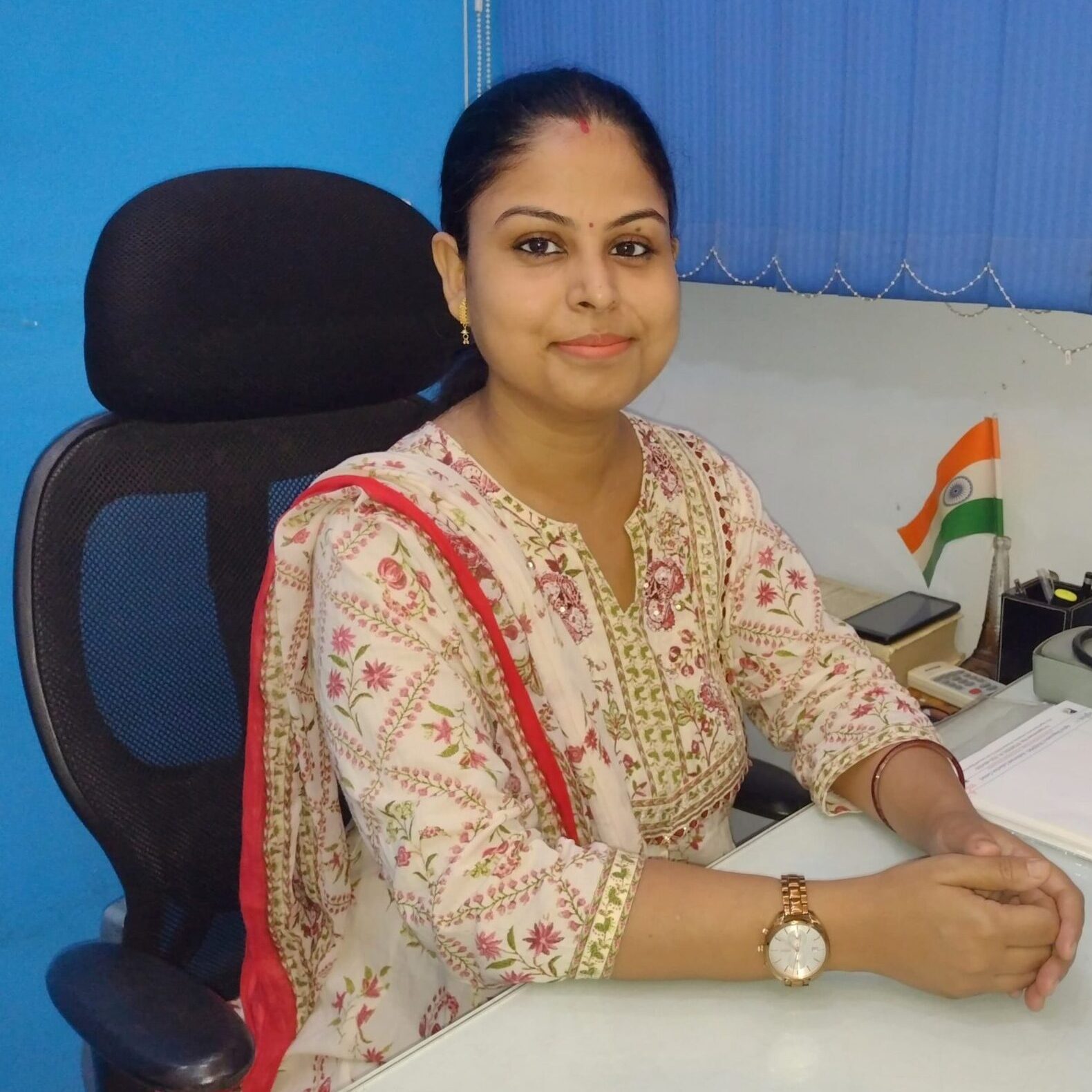
Written by Dr. Gunjan Rai, BHMS, MD (Homeopathy) – a trusted homeopathic doctor with 13+ years of experience and 10,000+ patients treated. She completed her BHMS from Nehru Homeopathic Medical College (Delhi University) and MD from West Bengal University of Health Sciences. Dr. Rai has served in reputed government hospitals including GTB and JPC, and was a research fellow at the Central Council for Research in Homeopathy. Her clinical expertise covers chronic diseases, allergies, hormonal imbalance, skin and hair concerns, pediatric health, and women’s wellness. She has also published multiple research papers in reputed journals, combining scientific rigor with compassionate care.