Have you ever noticed your eczema flaring up right before a major presentation, or a sudden breakout appearing during a high-stress week? You aren’t imagining it. Your skin and your mind are in constant, silent communication.
In clinical practice at Dr. Gunjan Homeocure, many patients are surprised to learn that stubborn, recurring skin conditions are frequently tied not just to topical triggers, but to emotional stress and inner well-being. Beneath the physical rash, redness, or scaling lies a profound physiological and emotional dialogue known as the skin-brain axis.
The Science of the Skin-Brain Axis
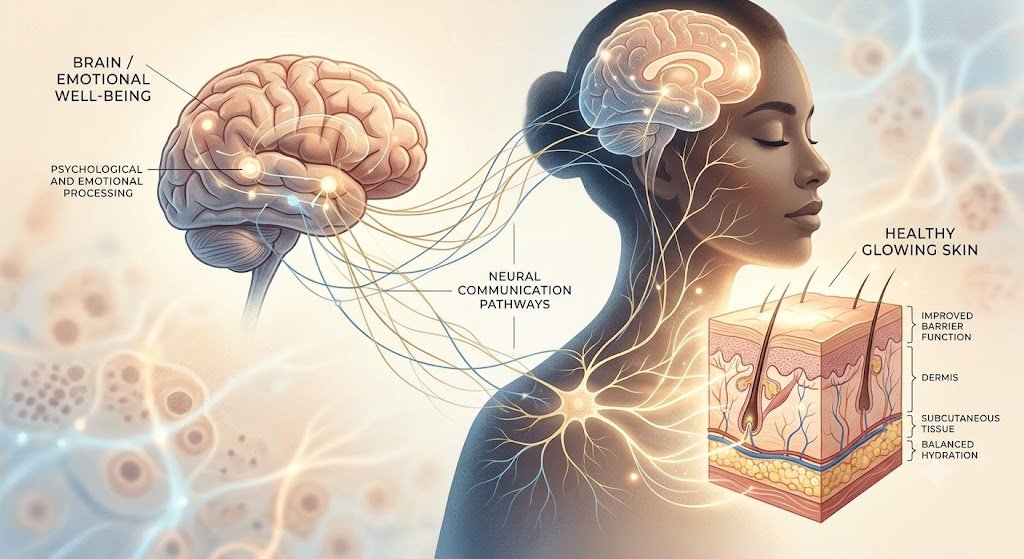
To understand why emotions affect the skin so powerfully, we have to look back at embryology. During the earliest stages of fetal development, both the skin and the central nervous system originate from the very same layer of cells—the ectoderm. Because of this shared origin, the skin acts as an external mirror of our internal neurological and emotional state.
When emotional stress, anxiety, grief, or suppressed anger occurs, the brain initiates a cascade of physiological changes that directly impact the skin:
During embryonic development, both the skin and the central nervous system originate from the same layer of cells (the ectoderm). This shared origin creates a lifelong physiological link known as the skin-brain axis:
- Neurogenic Inflammation: When you experience psychological stress, anxiety, or emotional suppression, your brain releases stress hormones like cortisol and adrenaline, along with neurotransmitters like substance P. These chemicals directly stimulate skin cells and nerve endings, triggering localized inflammation, increased sebum production, and intense itching.
- Immune Modulation: Prolonged stress compromises the epidermal barrier and alters immune function, making the skin more susceptible to allergic flare-ups, infections, and delayed healing.
- The Itch-Scratch Cycle: Stress lowers your nervous system’s threshold for physical sensations. Scratching temporarily relieves the itch by overriding it with pain signals, but it damages the skin barrier further, releasing more inflammatory compounds and perpetuating the rash. This barrier damage releases even more inflammatory cytokines, perpetuating a relentless cycle of itching, scratching, inflammation, and thickening of the skin (lichenification).
Common Skin Conditions Linked to Emotional Triggers
- Atopic Dermatitis (Eczema): Flare-ups are frequently preceded by acute emotional tension, frustration, or unexpressed anxiety. or a deep-seated feeling of vulnerability and insecurity. The intense nighttime itching often peaks when the mind slows down and repressed daily anxieties surface.
- Psoriasis: Emotional stress is widely recognized as one of the most powerful triggers for sudden, severe plaque flare-ups. Emotional shock, grief, or prolonged burnout frequently precede sudden, severe plaque flare-ups. Patients often report that their physical lesions worsen in direct proportion to their mental load.
- Acne Vulgaris: Stress-induced cortisol spikes stimulate oil glands, leading to blocked pores and breakouts. When anxiety leads to skin-picking (acne excoriée), physical damage compounds the issue. Patients unconsciously pick at minor blemishes as a physical outlet for nervous energy or emotional distress, causing permanent scarring.
- Urticaria (Hives): Strong emotional states can trigger sudden mast cell release, resulting in raised, intensely itchy welts.
- Alopecia Areata: Severe emotional trauma, sudden grief, or prolonged psychological exhaustion can push hair follicles prematurely into the telogen (resting) phase, leading to patchy, immune-mediated hair loss.
ALSO READ: Acne Homeopathic Treatment
A Holistic Approach: Beyond Topical Ointments
Conventional treatments often rely on topical steroids or immunosuppressants to suppress surface inflammation. While these provide temporary relief, they rarely address why the flare-up happened in the first place, leading to a frustrating cycle of recurrence when medication is stopped.
While these modalities can be necessary for suppressing acute, blinding inflammation, they treat the skin as an isolated organ detached from the rest of the body. By merely blocking surface pathways, they suppress the symptom rather than resolving the underlying root cause. Consequently, as soon as the medication is tapered or stopped, the condition frequently returns with renewed intensity—trapping the patient in a lifelong cycle of palliation.
Constitutional homeopathy takes a different path. Rather than treating the skin as an isolated organ, constitutional care looks at the patient as a whole. By factoring in your unique emotional blueprint, stress response, temperament, and physical symptoms, homeopathic remedies work to rebalance your internal reactivity and support long-term skin healing from within.
ALSO READ: Homeopathic Treatment for Lichen Planus: Root-Cause Healing for Lasting Relief
The Constitutional Homeopathic Approach
Constitutional homeopathy operates on a completely different paradigm. It views skin eruptions not as localized diseases to be forcefully driven inward, but as outward expressions of an internal imbalance.
Because every individual processes stress, grief, anxiety, and physical stimuli uniquely, constitutional treatment is deeply personalized:
- Individualized Remedy Selection: A homeopath looks beyond the mere label of “eczema” or “psoriasis.” We analyze the exact character of the itching (burning, stinging, crawling), the time of day symptoms worsen, thermal preferences, and—most importantly—the patient’s constitutional temperament, emotional make-up, and response to stress.
- Rebalancing Internal Reactivity: Rather than suppressing the skin, well-selected constitutional remedies help regulate the neuro-immuno-endocrine network, calming hyper-reactive nerve endings and restoring epidermal barrier function from within.
- Preventing Suppression: Homeopathic care ensures that internal health and emotional well-being improve alongside the skin, preventing the phenomenon of “metastasis” or shifting where skin symptoms are suppressed only to be replaced by deeper internal complaints like asthma or joint pain.
ALSO READ: Homeopathy Medicine for Hair Fall and Regrowth
Simple Mind-Body Steps to Support Your Skin
True healing requires a multi-dimensional approach that supports both the nervous system and the integumentary system:
- Mind-Body Regulation: Incorporating daily restorative practices—such as gentle yoga, mindfulness meditation, or deep diaphragmatic breathing—helps lower baseline cortisol output and downregulates sympathetic nervous system arousal.
- Gentle Barrier Protection: Avoid harsh soaps, chemical fragrances, and hot water showers that strip natural lipids. Use gentle, fragrance-free emollients to maintain skin hydration.
- Mindful Awareness of Habits: Recognizing physical stress tics, such as unconscious scratching or skin-picking, and replacing them with soothing tactile habits or stress-release outlets.
If you are struggling with a chronic, stress-aggravated skin condition and are looking for a root-cause, holistic solution, consider scheduling a comprehensive consultation at Dr. Gunjan Homeocure to address both your physical symptoms and your inner well-being.
Can stress actually cause physical skin rashes like eczema or hives?
Yes, absolutely. Through the skin-brain axis, psychological stress triggers the release of cortisol, adrenaline, and inflammatory neuropeptides like substance P. These chemicals directly stimulate skin cells and nerve endings, leading to localized inflammation, increased itching, and sudden flare-ups of conditions like atopic dermatitis (eczema) or urticaria (hives).
Why do conventional treatments like steroid creams often fail to provide permanent relief for chronic skin issues?
Topical steroids and immunosuppressants are designed to suppress surface inflammation and block local symptoms. However, because they treat the skin as an isolated organ rather than addressing the internal root cause, the underlying imbalance remains uncorrected. As soon as the medication is stopped, flare-ups frequently return.
How does constitutional homeopathy approach skin conditions differently?
Constitutional homeopathy views skin eruptions as external expressions of an internal imbalance. Rather than suppressing the skin, a constitutional remedy is chosen based on your unique physical symptoms, thermal preferences, and emotional blueprint. This individualized approach aims to rebalance your internal reactivity and support long-term skin health from within.
Is there a connection between acne breakouts and emotional anxiety?
Yes. Stress and anxiety cause hormonal fluctuations—specifically surges in cortisol—which stimulate the sebaceous (oil) glands to produce excess oil, clogging pores and causing breakouts. Additionally, anxiety can lead to unconscious nervous habits like skin-picking (acne excoriée), which physically damages the skin barrier and causes scarring.
What daily mind-body practices help support skin healing?
Incorporating daily restorative practices such as gentle yoga, mindfulness meditation, and deep diaphragmatic breathing helps downregulate sympathetic nervous system arousal and lower baseline cortisol levels. Combined with gentle, fragrance-free barrier protection, these practices help break the physical itch-scratch cycle.

Written by Dr. Gunjan Rai, BHMS, MD (Homeopathy) – a trusted homeopathic doctor with 13+ years of experience and 10,000+ patients treated. She completed her BHMS from Nehru Homeopathic Medical College (Delhi University) and MD from West Bengal University of Health Sciences. Dr. Rai has served in reputed government hospitals including GTB and JPC, and was a research fellow at the Central Council for Research in Homeopathy. Her clinical expertise covers chronic diseases, allergies, hormonal imbalance, skin and hair concerns, pediatric health, and women’s wellness. She has also published multiple research papers in reputed journals, combining scientific rigor with compassionate care.