Chronic bronchitis is a persistent, long-term inflammation of the bronchial tubes that carries air to and from your lungs. Characterized by a daily cough that produces mucus (sputum) for at least three months a year over two consecutive years, it falls under the umbrella of Chronic Obstructive Pulmonary Disease (COPD).
In urban environments like Delhi-NCR—where rapid urbanization, seasonal crop residue burning, vehicular emissions, and high particulate matter (PM2.5 and PM10) severely impact air quality—chronic respiratory ailments are witnessing a sharp upward trend. For individuals dealing with recurring chest congestion, breathlessness, and chronic coughing, finding sustainable, non-palliative care is essential for long-term respiratory health.

Understanding Chronic Bronchitis: Causes and Triggers
The primary driver of chronic bronchitis is prolonged exposure to irritants that damage the airways and lung tissue.
- Environmental Air Pollution: High AQI levels, industrial smog, and dense vehicular exhaust in metropolitan hubs are major contributors.
- Tobacco Smoke: Active smoking and prolonged secondhand smoke exposure account for the vast majority of chronic bronchitis cases.
- Occupational Hazards: Constant inhalation of chemical fumes, dust, grain dust, or textile fibers in workplace settings.
- Recurrent Respiratory Infections: Frequent viral or bacterial chest infections weaken mucosal immunity, predisposing individuals to chronic bronchial inflammation.
- Age & Respiratory History: Individuals over the age of 40, as well as those with a history of frequent childhood respiratory infections, severe asthma, or a weakened immune constitution, face significantly higher susceptibility.
Key Clinical Symptoms
- Productive Cough: A persistent cough accompanied by thick white, yellow, or greenish phlegm.
- Wheezing and Chest Tightness: Audible whistling sounds during breathing and a feeling of constriction across the chest.
- Shortness of Breath (Dyspnoea): Progressive breathlessness that worsens with physical exertion, damp weather, or polluted outdoor air.
- Fatigue: General physical exhaustion resulting from labored breathing and disrupted oxygen exchange.
Types of Chronic Bronchitis
Chronic bronchitis is broadly categorized under Chronic Obstructive Pulmonary Disease (COPD) and is generally viewed through its clinical presentation and progression:
- Simple Chronic Bronchitis: Characterized by a chronic productive cough and sputum production without significant airflow obstruction on spirometry testing.
- Mucopurulent Chronic Bronchitis: Involves persistent coughing with recurring thick, colored (mucopurulent) phlegm, often signaling secondary bacterial colonization or frequent flare-ups.
- Obstructive Chronic Bronchitis: Occurs when chronic inflammation, excessive mucus, and airway remodeling lead to progressive, irreversible airflow limitation, overlapping with clinical features of emphysema.
Why Conventional Treatments Often Fall Short
Conventional management typically relies on bronchodilators, inhaled corticosteroids, and expectorants. While these interventions provide temporary relief during acute flare-ups, they largely manage surface-level symptoms without altering the underlying hypersensitivity or reversing bronchial tissue hyperreactivity. Consequently, patients often find themselves dependent on inhalers year-round, with symptoms returning the moment medication is tapered or when seasonal pollution peaks.
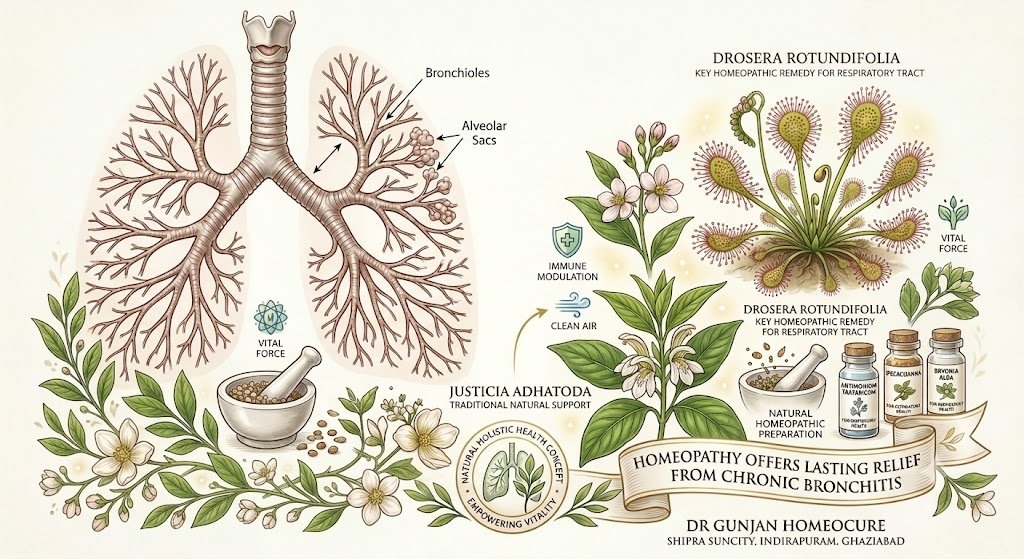
The Homeopathic Approach to Chronic Bronchitis
Constitutional homeopathy takes a deep, root-cause approach to chronic respiratory conditions. Rather than suppressing the cough or forcing artificial bronchodilation, individualized homeopathic care focuses on:
- Modulating Immune Hypersensitivity: Calming overactive immune responses that trigger excessive mucus production and bronchial spasm upon exposure to allergens or pollution.
- Reducing Airway Inflammation: Promoting the natural repair of irritated bronchial mucosa to decrease the frequency and intensity of flare-ups.
- Enhancing Vital Resistance: Strengthening the patient’s overall constitution so the respiratory tract becomes naturally resilient against seasonal temperature shifts and viral infections.
- Individualized Remedy Selection: Matching remedies to the patient’s unique symptom totality—including the exact character of the cough, time of aggravation, thermal preferences, and emotional constitution.
Some Homeopathic Remedies for Chronic Bronchitis
| Homeopathic Remedy | Key Indications & Symptom Totality |
| Antimonium Tartaricum | • Coarse, rattling mucus in the chest with little ability to expectorate. • Extreme breathlessness, drowsiness, and a feeling of suffocation. • Cough worsens when lying down or eating. |
| Bryonia Alba | • Dry, hard, painful cough that hurts the chest and head; patient holds their chest when coughing. • Cough triggered or aggravated by entering a warm room or by deep breathing. • Extreme thirst for large quantities of cold water at long intervals. |
| Ipecacuanha | • Persistent spasmodic cough accompanied by severe nausea, gagging, or vomiting. • Wheezing and constriction in the chest with excessive mucus accumulation. • Tongue remains characteristically clean despite the chest distress. |
| Arsenicum Album | • Wheezing and suffocative cough, particularly worse around midnight or in the early hours of the morning. • Breathlessness accompanied by anxiety, restlessness, and chills. • Relief obtained from warm drinks and warm applications. |
| Hepar Sulphur | • Loose, rattling cough with thick, yellow, purulent mucus. • Extreme hypersensitivity to cold air, drafts, and touch (cough worsens if any part of the body gets cold). • Irritable temperament during flare-ups. |
| Carbo Vegetabilis | • Chronic, deep, rattling cough with profuse cold sweat and blueness (cyanosis) of the lips or face due to poor oxygenation. • Desire for open air and to be fanned constantly. • Profound physical fatigue and low vitality. |
Important Note: Homeopathy is a highly individualized system of medicine based on comprehensive case-taking and symptom totality. Remedies are selected according to the unique physical, emotional, and constitutional picture of each patient. Self-treatment is discouraged; always consult a qualified and registered homeopathic doctor for proper diagnosis and personalized care.
General Management
Comprehensive general management for chronic bronchitis involves a combination of lifestyle modifications, environmental controls, and supportive respiratory care to reduce flare-ups and improve lung function:
- Avoid Respiratory Irritants: Completely eliminate active and passive tobacco smoke. Minimize exposure to chemical fumes, industrial dust, and heavy outdoor air pollution—particularly during high AQI days by wearing protective masks or staying indoors with air purifiers.
- Maintain Systemic Hydration: Drink plenty of warm water throughout the day. Adequate hydration helps thin thick bronchial mucus, making it easier to cough up and clear from the airways.
- Breathing Exercises & Pulmonary Rehabilitation: Practice controlled breathing techniques, such as pursed-lip breathing and diaphragmatic breathing, to improve oxygen exchange, reduce breathlessness, and strengthen respiratory muscles.
- Airway Clearance Techniques: Gentle chest physiotherapy, postural drainage, or controlled huff-coughing can help clear accumulated secretions when recommended by a healthcare professional.
- Immune Support & Preventive Vaccinations: Stay updated on recommended vaccinations (such as annual flu shots and pneumococcal vaccines) to protect against respiratory infections that frequently trigger acute bronchitis flare-ups.
- Balanced Nutrition & Gentle Movement: Follow an anti-inflammatory diet rich in antioxidants and engage in light, low-intensity physical activity or medical yoga tailored to your tolerance level to support overall stamina and immune resilience.
Red Flags: When to Seek Immediate Emergency Care
While constitutional homeopathy helps manage long-term respiratory hypersensitivity, chronic bronchitis can occasionally progress to acute respiratory distress or secondary complications. Seek urgent medical attention if you or the patient experience any of the following red flags:
- Severe Cyanosis: A bluish or grayish tint to the lips, nail beds, or skin, indicating dangerously low blood oxygen levels.
- Acute Respiratory Distress: Severe, sudden shortness of breath, gasping for air, or an inability to complete a full sentence without pausing to breathe.
- Hemoptysis: Coughing up blood or rust-colored sputum in significant amounts.
- High-Grade Fever & Chills: Persistent high fever accompanied by sharp pleuritic chest pain, which may signal pneumonia or secondary bacterial infection.
- Confusion or Lethargy: Drowsiness, mental confusion, disorientation, or extreme fatigue caused by carbon dioxide retention (hypercapnia).
- Failure to Respond: Rapid worsening of symptoms despite supportive care and medication.
Expert Care at Dr. Gunjan Homeocure
Managing chronic respiratory conditions requires deep clinical insight, personalized case-taking, and a compassionate, patient-centric treatment philosophy. As a trusted homeopathic doctor, Dr. Gunjan Rai practices classical, constitutional homeopathy focused on restoring deep physiological harmony and lasting wellness.
Recognized as the best homeopathic doctor in ghaziabad, Dr. Gunjan Rai combines rigorous clinical diagnostics with individualized natural care at her established clinic in Shipra Suncity, Indirapuram. Patients seeking specialized holistic care frequently travel from across neighboring localities, earning her recognition as the best homeopathic doctor in noida and the best homeopathic doctor in delhi ncr.
If you or a loved one are struggling with recurrent respiratory distress, searching for a reliable homeopathic doctor near me who offers comprehensive root-cause solutions can help you reclaim a breath of fresh air and a healthier quality of life. Consultations are available both in-person at the Indirapuram clinic and online for remote patients.
What is chronic bronchitis, and how is it different from a common cough?
Chronic bronchitis is a long-term inflammation of the bronchial tubes characterized by a daily productive cough (producing mucus) that lasts for at least three months a year for two consecutive years. Unlike a common viral cough or acute bronchitis—which clears up within a couple of weeks—chronic bronchitis is a persistent, recurring condition, often categorized under Chronic Obstructive Pulmonary Disease (COPD).
What are the main triggers of chronic bronchitis, especially in urban areas like Delhi-NCR?
The primary triggers include long-term exposure to environmental air pollution (high particulate matter like PM2.5 and PM10), dense vehicular smog, industrial emissions, seasonal crop residue burning, active or passive tobacco smoke, and recurrent respiratory infections that weaken mucosal immunity over time.
How does homeopathy treat chronic bronchitis differently from conventional medicine?
Conventional treatments—such as inhalers, bronchodilators, and corticosteroids—primarily suppress symptoms or temporarily open airways during flare-ups. Constitutional homeopathy focuses on root-cause management by modulating immune hypersensitivity, reducing deep-seated airway inflammation, strengthening the respiratory mucosa, and building the patient’s overall vital resistance to prevent recurrent episodes.
Can homeopathy help reduce dependence on regular inhalers?
Yes. By addressing the underlying hyperreactivity of the bronchial tubes and minimizing the frequency and intensity of acute flare-ups, individualized homeopathic care helps many patients gradually manage their symptoms better and reduce their reliance on emergency rescue medications under proper clinical guidance.
Are homeopathic remedies safe for long-term use in chronic respiratory conditions?
Homeopathic medicines are derived from natural substances, prepared through potentization, and prescribed in micro-doses. They are completely safe, non-toxic, non-addictive, and do not cause the side effects or dependency risks often associated with long-term steroid use.
What should I expect during a homeopathic consultation for chronic bronchitis?
A comprehensive homeopathic consultation involves a detailed case-taking process that looks beyond your cough. It evaluates your complete medical history, environmental triggers, thermal reactions, emotional constitution, sleep patterns, and the exact characteristics of your mucus and cough to select a deeply individualized constitutional remedy.
Do I need to visit the clinic in person, or are online consultations available?
Both in-person and online consultations are available. You can visit the clinic in Shipra Suncity, Indirapuram, Ghaziabad, or opt for a convenient teleconsultation with Dr. Gunjan Rai from anywhere in Delhi-NCR, Noida, or beyond, with prescription medicines delivered securely.

Written by Dr. Gunjan Rai, BHMS, MD (Homeopathy) – a trusted homeopathic doctor with 13+ years of experience and 10,000+ patients treated. She completed her BHMS from Nehru Homeopathic Medical College (Delhi University) and MD from West Bengal University of Health Sciences. Dr. Rai has served in reputed government hospitals including GTB and JPC, and was a research fellow at the Central Council for Research in Homeopathy. Her clinical expertise covers chronic diseases, allergies, hormonal imbalance, skin and hair concerns, pediatric health, and women’s wellness. She has also published multiple research papers in reputed journals, combining scientific rigor with compassionate care.