Skin problems can be confusing, especially when different conditions produce similar symptoms. Eczema and psoriasis are two such conditions. Both can cause redness, dryness, scaling and irritation, but they are not the same disorder.
If you have persistent patches, itching, dryness or scaling, understanding the difference between eczema vs psoriasis can help you decide when professional medical advice may be appropriate.
People in and around Indirapuram, Ghaziabad and Noida who are exploring complementary healthcare may also search for a homeopathic doctor near me. Dr. Gunjan Rai at Dr. Gunjan Homeocure, located in Shipra Suncity, Indirapuram, Ghaziabad, provides individualized homeopathic consultations.
Eczema vs Psoriasis: What Is the Difference?
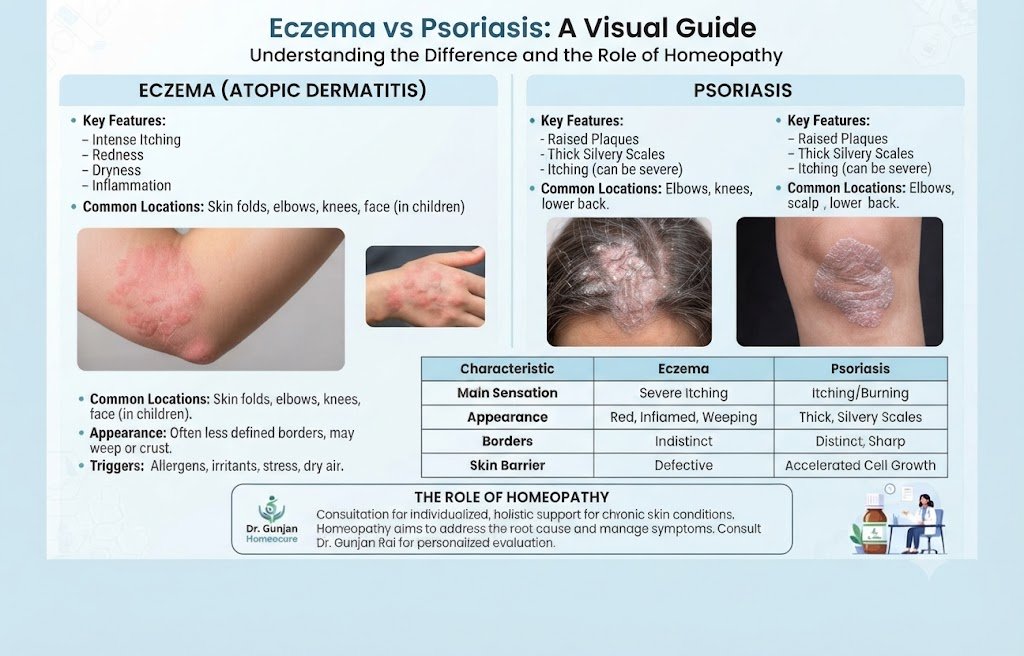
Although eczema and psoriasis may appear alike at first glance, several characteristics can help distinguish them.
Eczema commonly causes very itchy, dry and irritated skin. The skin may become cracked, inflamed or thickened after repeated scratching.
Psoriasis, on the other hand, often appears as clearly defined, raised areas of skin covered by scaling. It may affect the elbows, knees, scalp and other areas, although its appearance and location can vary.
There is no single visual sign that can accurately diagnose every case. Some people may have an unusual presentation, and the two conditions can occasionally be difficult to distinguish.
That is why a professional assessment is preferable to relying solely on photographs or internet searches.
Also Read:Comprehensive Guide to Homeopathy: Natural, Root-Cause Healing for Lasting Wellness
What Is Eczema?
Eczema refers to a group of conditions that can make the skin dry, inflamed and itchy. Atopic dermatitis is one of the most common forms.
People with eczema may experience:
- Persistent or recurring itching
- Dry or sensitive skin
- Red or inflamed patches
- Flaking or scaling
- Cracks in the skin
- Skin thickening caused by repeated scratching
- Periods of improvement followed by flare-ups
Eczema can occur at any age. The areas affected can differ depending on the type of eczema and the individual’s age.
Certain environmental conditions, irritants, allergens and lifestyle factors may contribute to flare-ups in susceptible individuals.
What Is Psoriasis?
Psoriasis is a chronic inflammatory skin condition involving the immune system. It is not contagious, so it cannot be transmitted from one person to another through physical contact.
Psoriasis may cause:
- Raised patches on the skin
- Noticeable scaling
- Dryness
- Itching or irritation
- Thickened areas of skin
- Scalp lesions
- Changes involving the nails in some people
The elbows, knees and scalp are commonly affected, but psoriasis can occur elsewhere on the body as well.
Different forms of psoriasis can have very different appearances, so a professional evaluation can be useful when the diagnosis is uncertain.
Eczema vs Psoriasis: Side-by-Side Comparison
| Characteristic | Eczema | Psoriasis |
Main symptoms | Itching, dryness and inflammation | Raised patches and scaling Itching Often prominent May range from mild to significant |
| Skin appearance | Dry, irritated or inflamed | Often sharply defined and thickened |
| Common areas | Depends on the type; folds, hands and face can be affected | Knees, elbows and scalp are common sites |
| Contagious | No | No |
| Course | May flare and settle repeatedly | Often chronic with periods of worsening and improvement |
| Diagnosis | Usually based on clinical assessment | Usually based on clinical assessment |
These are general patterns rather than absolute rules. Skin conditions do not always follow a textbook presentation.
Can Eczema and Psoriasis Look the Same?
Sometimes.
This is one of the biggest reasons people search for terms such as “eczema vs psoriasis pictures” or “eczema or psoriasis?” when trying to identify a rash.
Both conditions can produce:
- Dry skin
- Redness
- Scaling
- Itching
- Irritation
- Thickened skin
However, their underlying mechanisms and typical patterns are different.
Other skin conditions can also produce similar symptoms. Fungal infections, allergic reactions, contact dermatitis and several other disorders can sometimes resemble eczema or psoriasis.
Consequently, persistent skin changes should not automatically be labelled as eczema or psoriasis without appropriate assessment.
What Causes Eczema?
There is no single cause of eczema.
A combination of genetic, immune-system and environmental factors can contribute to its development. People with eczema may also have a skin barrier that does not retain moisture as effectively as healthy skin.
Potential aggravating factors can include:
- Dry weather
- Excessive heat or sweating
- Harsh soaps and detergents
- Certain fabrics
- Irritating skincare products
- Stress
- Scratching
- Individual allergens or irritants
Not every trigger affects every person. Keeping track of when symptoms appear or worsen can sometimes help identify personal patterns.
What Can Trigger Psoriasis?
Psoriasis is influenced by immune-system activity, genetics and environmental factors.
Some people notice flare-ups following particular triggers, which may include:
- Psychological stress
- Certain infections
- Skin injuries
- Smoking
- Alcohol consumption
- Some medications
- Environmental or seasonal changes
Triggers differ considerably from one individual to another. Identifying personal patterns can therefore be more useful than following a generic list of triggers.
Is Eczema More Itchy Than Psoriasis?
There is no universal rule, but itching is often a particularly prominent symptom of eczema.
Psoriasis can also itch, burn or feel uncomfortable. The intensity can vary depending on the type of psoriasis, the location and the individual.
If itching is severe enough to disturb sleep or cause repeated scratching and skin damage, professional medical advice is recommended.
Can You Have Both Eczema and Psoriasis?
It is possible for a person to experience characteristics of both conditions, although they are distinct diseases.
This is another reason why self-diagnosis can be unreliable. If a skin condition repeatedly changes appearance, fails to improve or does not respond as expected to treatment, reassessment may be appropriate.
The Role of Homeopathy in Skin Conditions
Some people with chronic skin complaints explore complementary approaches such as homeopathy.
Homeopathy is based on a system of individualized treatment involving highly diluted preparations. A homeopathic consultation may involve discussing the person’s symptoms, general health, lifestyle and other individual factors.
Why Do People Consult a Homeopathic Doctor for Chronic Skin Problems?
People may seek a homeopathic consultation for various reasons. Some prefer an individualized approach and want to discuss recurring symptoms alongside broader lifestyle and health concerns.
A consultation can provide an opportunity to:
- Discuss the history of recurring skin symptoms
- Identify patterns associated with flare-ups
- Review lifestyle and environmental factors
- Discuss existing treatments and concerns
- Determine whether another medical evaluation may be appropriate
At Dr. Gunjan Homeocure, Dr. Gunjan Rai provides personalized homeopathic consultations for individuals seeking complementary healthcare.
The goal of any responsible consultation should be to understand the patient’s concerns while recognizing when conventional medical or specialist assessment is necessary.
When Should You See a Dermatologist?
A skin rash does not always require specialist treatment, but some situations warrant professional assessment.
Consider consulting a dermatologist or appropriate healthcare professional if:
- The rash persists for a long period.
- Symptoms repeatedly return.
- The affected area is rapidly expanding.
- There is considerable pain or swelling.
- The skin is bleeding frequently.
- You notice pus, unusual discharge or other possible signs of infection.
- Symptoms interfere with sleep.
- The rash affects sensitive areas such as the eyes or mouth.
- You are uncertain whether you have eczema, psoriasis or another condition.
- Your existing treatment is not producing the expected improvement.
Getting the diagnosis right is particularly important because several different skin disorders can resemble eczema or psoriasis.
Frequently Asked Questions
What is the main difference between eczema and psoriasis?
Eczema commonly presents with significant itching, dryness and inflammation, whereas psoriasis often produces well-defined, raised and scaly patches. However, symptoms can overlap, so professional assessment may be needed.
Is psoriasis contagious?
No. Psoriasis is not an infectious disease and cannot be passed to another person through ordinary contact.
Is eczema contagious?
No. Eczema is not contagious
Which condition causes more itching: eczema or psoriasis?
Eczema is often strongly associated with itching, but psoriasis can also cause considerable itching or discomfort. The experience varies from person to person.
Can homeopathy cure eczema?
Homeopathy focuses on individualized care and constitutional treatment to help manage chronic skin concerns like eczema, supporting overall skin health and aiming to reduce the frequency and intensity of flare-ups. While many patients report significant relief and improved quality of life through homeopathic care, responses can vary individually. It is important to consult a qualified practitioner for a personalized evaluation and to ensure your skin condition is properly diagnosed.
Can homeopathy cure psoriasis?
Homeopathy takes a holistic and individualized approach to help manage chronic inflammatory skin conditions like psoriasis, focusing on supporting overall wellness and helping to minimize the severity and frequency of flare-ups. Because results can vary significantly from person to person, a comprehensive medical evaluation is essential to properly diagnose the condition and determine the most appropriate long-term management plan.
How can I find a homeopathic doctor near me?
If you are located around Indirapuram, Ghaziabad or nearby Noida, you can research local practitioners based on qualifications, experience, clinic location and transparency about treatment options.
Dr. Gunjan Homeocure, led by Dr. Gunjan Rai, is located in Shipra Suncity, Indirapuram, Ghaziabad.
Where is Dr. Gunjan Homeocure located?
Dr. Gunjan Homeocure is located at 275-A, Regal, Shipra Suncity, Indirapuram, Ghaziabad, Uttar Pradesh 201014.
Medical Disclaimer
This article is intended for general educational purposes only. It is not a substitute for diagnosis, medical advice or treatment from a qualified healthcare professional. Do not discontinue prescribed medication or delay medical evaluation based solely on information in this article.
Written by Dr. Gunjan Rai, BHMS, MD (Homeopathy) – a trusted homeopathic doctor with 13+ years of experience and 10,000+ patients treated. She completed her BHMS from Nehru Homeopathic Medical College (Delhi University) and MD from West Bengal University of Health Sciences. Dr. Rai has served in reputed government hospitals including GTB and JPC, and was a research fellow at the Central Council for Research in Homeopathy. Her clinical expertise covers chronic diseases, allergies, hormonal imbalance, skin and hair concerns, pediatric health, and women’s wellness. She has also published multiple research papers in reputed journals, combining scientific rigor with compassionate care.