The arrival of the monsoon brings welcome relief from the blistering summer heat across the National Capital Region. However, it also introduces a familiar, annual healthcare challenge. Heavy downpours regularly lead to waterlogging and drainage issues in areas stretching from Gurgaon to Indirapuram. This accumulation of stagnant water serves as the perfect breeding ground for mosquitoes, triggering the region’s predictable annual surge in vector-borne diseases like dengue, malaria, and chikungunya between June and September.
While standard mosquito control measures are essential, true protection begins from within. Incorporating preventive homeopathy into your family’s seasonal routine safely primes the body’s natural defenses, reducing susceptibility to vector-borne pathogens before the first bite even happens. During this high-risk period, many families look beyond standard topical repellents and mosquito nets. They want to proactively strengthen their immune systems from within.
Quick Overview: Monsoon in Delhi-NCR brings an annual spike in mosquito-borne illnesses like Dengue, Chikungunya, and Malaria. While conventional measures focus on external prevention, homeopathy offers internal defense through the concept of Genus Epidemicus (a collective seasonal remedy) to safely boost immunity and support recovery.
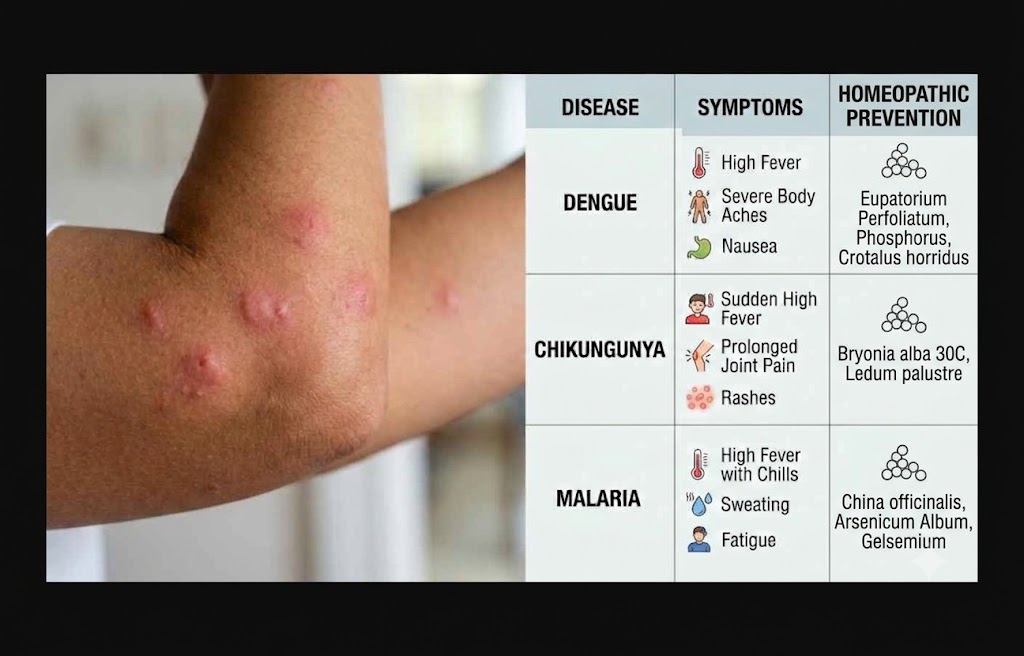
The Power of Preventive Homeopathy: Genus Epidemicus
In homeopathy, proactive defense against seasonal outbreaks relies on a deeply researched principle known as the Genus Epidemicus. When an infectious disease threatens a specific community, homeopaths study the collective symptom profile of the local outbreak to identify a prominent remedy that acts as a safe, natural preventive.
For instance, remedies like Eupatorium Perfoliatum have a long history of clinical use during regional outbreaks due to their ability to match and counter the severe bone pains and sudden high fevers characteristic of dengue. Rather than waiting for a sudden high fever, chills, or severe body aches to disrupt your household, initiating a customized regimen of monsoon immunity boosters can provide a vital layer of defense.
The Changing Genus Epidemicus: Homeopathic research highlights that the Genus Epidemicus is not static for a specific disease entity; it changes based on environmental conditions and the specific strain or presenting symptoms of that year’s outbreak.
Modern Nanoparticle Research: Modern evaluations published in journals like the Indian Journal of Research in Homoeopathy suggest that these GE remedies operate via “hormesis.” The micro-dilutions contain stable nanoparticles of the source materials that prompt adaptive, non-toxic systemic immune responses, preparing the body to fend off vector-borne pathogens before exposure.
Several large-scale scientific studies and clinical trials have evaluated the effectiveness of Genus Epidemicus for dengue, chikungunya, and malaria:

1. How Does Homeopathy Help Prevent Dengue Fever?
Dengue epidemics have been extensively studied using the Genus Epidemicus approach, notably in Brazil, Cuba, and India.
- The Brazil Prevention Campaigns (2007–2010): In a series of public health interventions in Penápolis, Brazil, homeopaths identified China officinalis as the Genus Epidemicus based on the localized symptom profile of the outbreak. Scientific monitoring over a 3-month follow-up period showed a 66% reduction in dengue incidence in 2007 compared to the unmedicated control group. In subsequent evaluations, the effectiveness ranged from a 54% to a 93.5% reduction in disease incidence, alongside significantly lower symptom severity in those who did contract the virus.
- The Rio de Janeiro Outbreak Study (2008): During a massive outbreak in Rio de Janeiro, public health authorities utilized a homeopathic complex mirroring the collective epidemic profile (containing Eupatorium Perfoliatum, Phosphorus, and Crotalus horridus). In the first three months of administration, the incidence of dengue in the intervention municipality fell by 93%, while the rest of the state of Rio de Janeiro experienced a 128% increase in cases over the same period.
- Central Council for Research in Homoeopathy (CCRH, India): During seasonal outbreaks in Delhi, clinical data gathered through hospitals and data-recording software repeatedly identified Eupatorium perfoliatum as the core epidemic remedy due to its precise match to the severe, bone-breaking joint pains and sudden high fevers reported by local patients.
2. How Does Homeopathy Help Prevent Chikungunya?
Because chikungunya causes distinct, severe arthralgia (joint pain) that can incapacitate large populations, it provides a very clear symptomatic picture for isolating a Genus Epidemicus.
- The Kerala Cluster Randomized Prophylactic Trial: A major scientific study conducted by the Central Council for Research in Homoeopathy (CCRH) evaluated the usefulness of Bryonia alba 30C as the Genus Epidemicus during a severe outbreak in Kerala, India and was highly effective at decreasing the real-world incidence of the disease during the active outbreak.
3. How Does Homeopathy Help Prevent Malaria?
Historically and in modern observational setups, malaria has served as a benchmark for understanding how a Genus Epidemicus shifts across seasons and locations.
- While one seasonal wave characterized by intense shivering and thirstlessness pointed to Gelsemium as the preventive GE, a separate outbreak defined by gastric complications, heavy sweating, and periodic bone pains required China officinalis or Arsenicum Album to achieve prophylactic protection.
- Also read: Homeopathy for Weak Immunity: A Natural Approach to Recurrent Infections & Low Resistance
Role of Homeopathy in Managing Acute Symptoms and Recovery
Beyond prevention, individualized homeopathy plays a crucial role for individuals already battling seasonal viral infections:
- Dengue Care: One of the most critical aspects of managing dengue is monitoring and stabilizing fluctuating blood parameters. Homeopathic remedies help gently support the body’s natural recuperative processes, helping to safely manage dropping platelet counts and reduce post-viral fatigue without causing harsh gastrointestinal side effects.
- Chikungunya Relief: For those suffering from chikungunya, where debilitating joint inflammation can linger for months, tailored chikungunya homeopathic treatment focuses on reducing joint swelling, alleviating severe body aches, and restoring mobility.
- Malaria Recovery: Homeopathic options provide support for the classic cycling chills, exhausting sweat phases, and extreme weakness associated with malaria infections, helping speed up the overall recovery timeline.
- Homeopathic Doctor Near Me in Indirapuram
Consulting a Homeopathic Doctor in Delhi-NCR for Customized Care
No two bodies react to a viral infection in the exact same way. While one person might experience severe nausea and bone pain, another might suffer from intense headaches and shivering. Homeopathy addresses the individual, not just the disease name.
Consulting the best homeopathic doctor in Delhi NCR ensures that your preventive or therapeutic strategy is tailored precisely to your family’s unique medical histories and constitutional needs. Taking this step early helps protect vulnerable family members, including children and elders, before the peak of the rainy season arrives. If you are looking for a comprehensive, natural defense plan this monsoon, consider scheduling a consultation at an experienced clinic to build your internal immunity.
Book an Appointment now.

Written by Dr. Gunjan Rai, BHMS, MD (Homeopathy) – a trusted homeopathic doctor with 13+ years of experience and 10,000+ patients treated. She completed her BHMS from Nehru Homeopathic Medical College (Delhi University) and MD from West Bengal University of Health Sciences. Dr. Rai has served in reputed government hospitals including GTB and JPC, and was a research fellow at the Central Council for Research in Homeopathy. Her clinical expertise covers chronic diseases, allergies, hormonal imbalance, skin and hair concerns, pediatric health, and women’s wellness. She has also published multiple research papers in reputed journals, combining scientific rigor with compassionate care.